
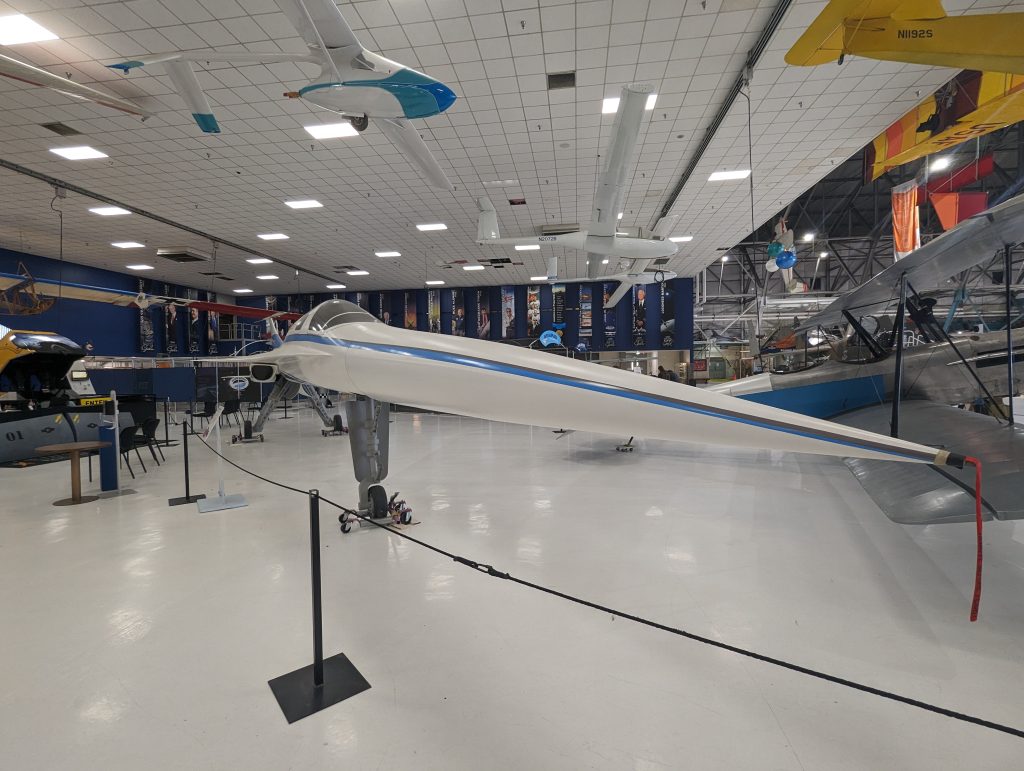
Supersonic passenger flight disappeared from the skies in 2003 when the last Concorde made its final landing at London Heathrow. For two decades, nothing came close to replacing it. Now, in 2026, the race to bring supersonic travel back is moving faster than it has at any point since Concorde was retired, with multiple aircraft in active development and two programmes already breaking the sound barrier.
Here is where each of the major programmes stands right now.
Boom Supersonic: XB-1 Retired, Overture Next
The biggest headline in supersonic aviation over the past year belongs to Boom Supersonic, a Colorado-based company building toward a commercial airliner called the Overture. To get there, they built a one-third scale demonstrator called the XB-1 (nicknamed “Baby Boom”).
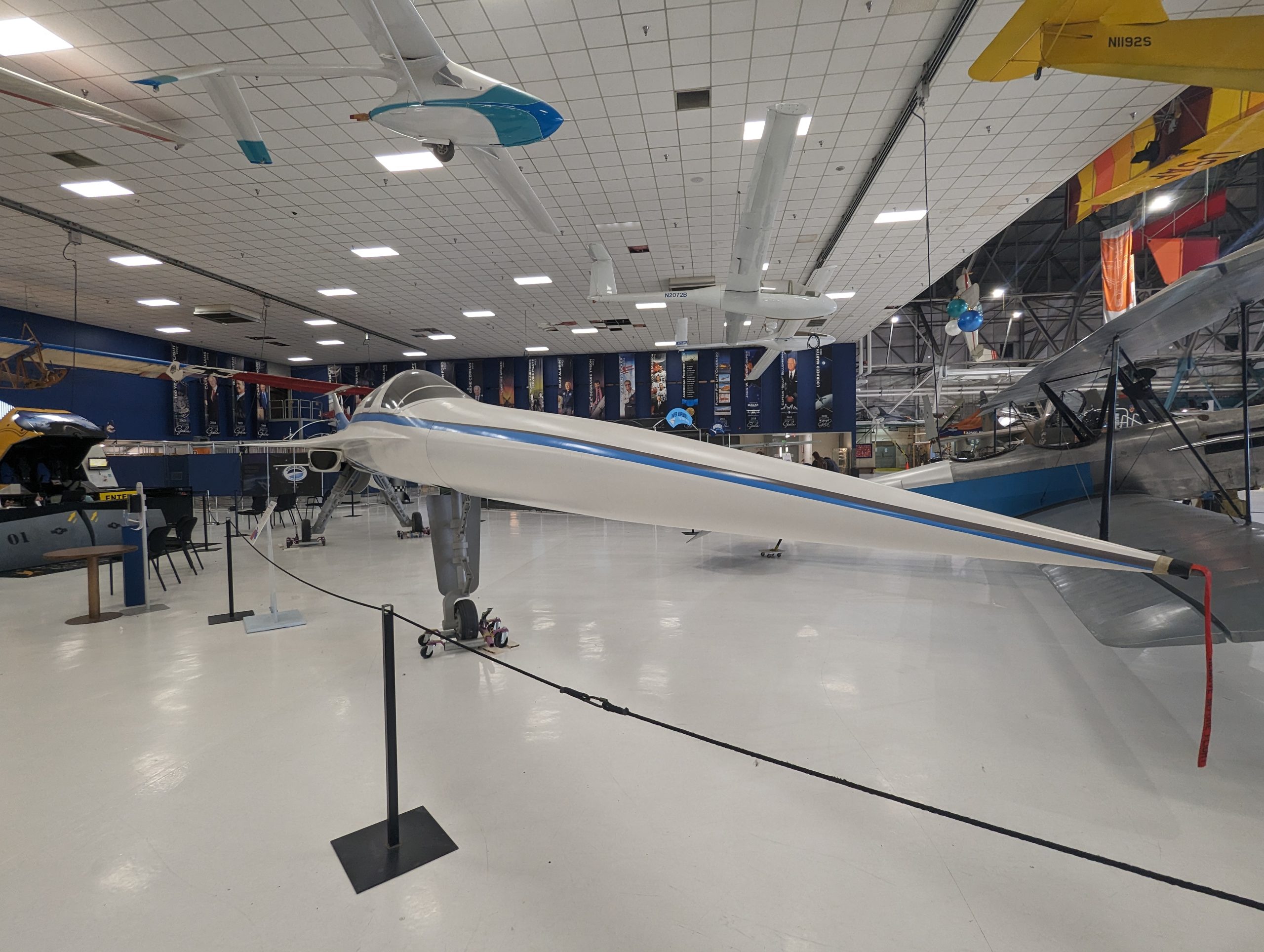
On January 28, 2025, the XB-1 became the first privately developed jet aircraft to break the sound barrier, reaching Mach 1.1 over the Mojave Desert. A second supersonic flight followed on February 10, after which NASA captured the aircraft’s shockwave on camera. The XB-1 was then retired, having done its job: proving that Boom’s design approach and engineering culture could actually produce a working supersonic aircraft.
The Overture itself is a different beast entirely. Designed to carry 60 to 80 passengers at Mach 1.7 (about 1,800 km/h) with a range of 4,250 nautical miles, it targets routes like London to New York in under 4 hours. Boom plans to roll out the first completed Overture airframe in 2026, with certification and entry into service targeted for 2030.
Airlines including United, American, and Japan Airlines have placed orders. Boom has also announced “Boomless Cruise,” a flight profile that keeps the aircraft at an altitude where the sonic boom dissipates before reaching the ground, potentially opening overland routes that were off-limits to Concorde.
Boom’s custom-built Symphony turbofan engine, developed specifically for Overture, was in core testing through late 2025. Getting the engine right is arguably the programme’s biggest remaining technical challenge before the aircraft flies.
NASA X-59: Quiet Supersonic, Government-Backed
While Boom is chasing commercial supersonic travel, NASA is attacking the regulatory problem head-on. The X-59, built by Lockheed Martin’s Skunk Works, is not a prototype for a passenger jet. It is a research aircraft designed to answer one specific question: can a supersonic aircraft be made quiet enough to fly over populated areas?
Concorde’s sonic boom was its fatal flaw for commercial viability. The FAA banned overland supersonic flight in the US in 1973, and most countries followed. The X-59’s entire purpose is to generate the data needed to change that.
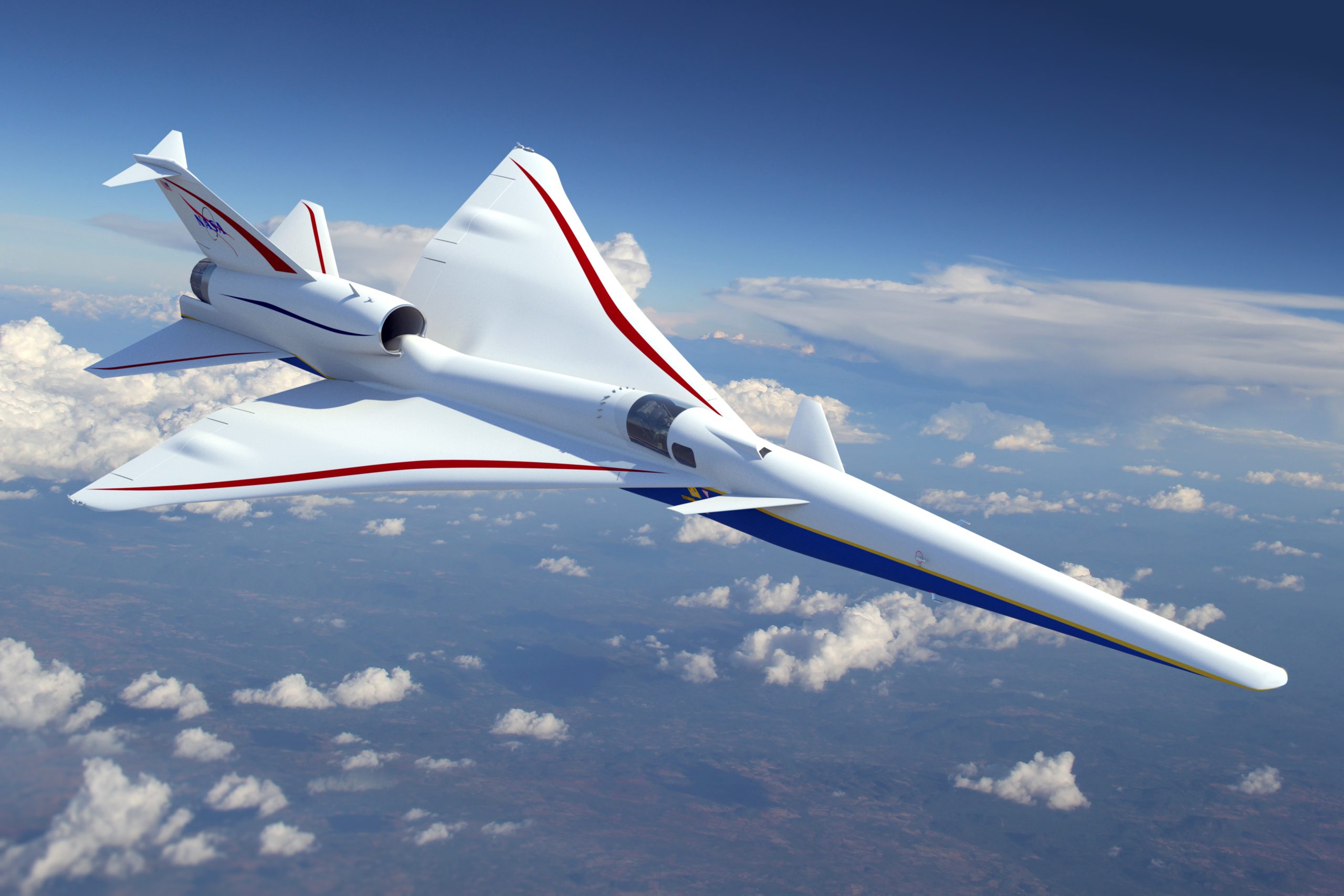
The X-59 made its first flight on October 28, 2025, at Edwards Air Force Base in California, with NASA test pilot Nils Larson at the controls. The aircraft flew for 67 minutes, reaching 12,000 feet and 230 mph with landing gear down, standard procedure for an experimental aircraft’s maiden flight. The team is now preparing for a second flight, completing an engine run on March 12, 2026, as one of the final ground tests before becoming airborne again.
The X-59’s design is striking: a 30-metre needle-like fuselage, no forward-facing cockpit windows (the pilot uses a camera-fed display instead), and a shape engineered to disperse shockwaves so they never merge into the single sharp crack of a conventional supersonic aircraft. The goal is a sound roughly 75 decibels quieter than Concorde, described as a thump rather than a boom.
The programme has three phases. First, envelope expansion to validate safety and performance up to Mach 1.4 at 55,000 feet. Then acoustic validation to confirm the low-boom characteristics. Finally, community overflight tests over selected US cities, with the data handed to the FAA and ICAO to build the case for changing the overland supersonic ban.
If the X-59 succeeds, it could unlock overland supersonic routes that never existed for Concorde. That would fundamentally change the economics of supersonic travel for everyone.
Hermeus: Defence-First, Hypersonic Ambitions
While Boom targets Mach 1.7 and NASA tests at Mach 1.4, Atlanta-based Hermeus is aiming considerably higher. The company is developing a series of aircraft under the Quarterhorse programme, targeting speeds above Mach 5 using turbine-based combined cycle engines that transition from jet to ramjet propulsion mid-flight.
On March 2, 2026, Hermeus announced the successful first flight of its newest Quarterhorse variant, its second successful first flight in nine months. The company is primarily defence-focused, working with the US Air Force on high-speed aircraft for government missions, but the long-term roadmap includes a commercial hypersonic passenger aircraft called Halcyon.
Hermeus is operating at a different timescale to Boom. Their technology is less mature for commercial application, but if turbine-based combined cycle propulsion works at scale, the performance ceiling is dramatically higher than anything turbofan-powered aircraft can achieve.
Spike Aerospace: The Quiet Business Jet
Boston-based Spike Aerospace is developing the S-512, a supersonic business jet targeting speeds around Mach 1.6 with a cabin designed for up to 18 passengers. The pitch is straightforward: the same technology that makes supersonic flight viable for airlines can work for private and charter operators, at lower development cost and with a smaller, more flexible aircraft.
Spike announced in mid-2025 that it is completing an “enhanced study” to refine aerodynamics, cabin configuration, and low-boom performance. The company has been through multiple design iterations and is moving toward a full-scale demonstrator, with no formal first flight date announced yet.
The Regulatory Landscape
All of these programmes are racing against the same clock: the overland supersonic ban. NASA’s X-59 is the most direct attempt to address it, but the FAA and ICAO process for updating standards takes years even after the supporting data exists. Any change to overland supersonic rules is realistically a mid-2030s outcome at the earliest.
For Boom’s Overture, that means the initial commercial routes will almost certainly be transoceanic: New York to London, Los Angeles to Tokyo, Sydney to Los Angeles. These are high-yield routes where supersonic speed offers a real advantage, and where overland restrictions are not a constraint.
What It Means
Supersonic aviation is not a single technology race. It is several parallel bets on different speed regimes, different markets, and different regulatory strategies, all moving at the same time.
Boom is closest to commercial service and has the clearest path to market. NASA is building the scientific foundation to potentially unlock routes that were never commercially viable for Concorde. Hermeus is further out but targeting a performance level that could eventually make today’s supersonic programmes look modest.
Twenty years after Concorde’s retirement, the conditions for a supersonic revival are better than they have ever been. Whether 2030 delivers on that promise is still an open question, but the runway has never looked clearer.