
# The Great De-Waivering: FAA Part 108 and the End of the BVLOS Exception Era
The long-standing regulatory ceiling for the American drone industry is finally starting to lift, but it is not happening via a single breakthrough moment. Instead, it is the result of a massive, grinding bureaucratic shift known as Part 108. For years, flying a drone beyond visual line of sight (BVLOS) has been the “holy grail” for commercial operators. It was technically possible, but only if you had the patience to navigate a waiver process that felt more like a dark art than a regulatory framework.
That era is coming to an end. As we move through May 2026, the FAA is nearing the finish line for Part 108, a framework designed to normalize BVLOS operations. This is not just another minor update to the rulebook. It is a fundamental shift in how the National Airspace System (NAS) functions.
## The Death of the Waiver
Under the current Part 107 rules, everything is built around the pilot being able to see the aircraft with their own eyes. If you want to fly delivery routes in Texas or inspect power lines in Ohio from a remote operations center, you need a waiver. Specifically, a 107.31 waiver.
The problem is that waivers are individual. They are tied to specific locations, specific pilots, and specific safety cases. They do not scale. You cannot build a national delivery network or a nationwide bridge inspection program on a stack of one-off permissions.
Part 108 replaces this “ask for permission” model with a “follow the rules” model. If your aircraft meets certain technical standards and your pilots have the right certifications, you just fly. No more waiting six months for a desk officer in Washington to decide if your detect-and-avoid system is “robust” enough for a specific cornfield.
## The 110-Pound Milestone
One of the most significant changes buried in the Part 108 drafts is the weight limit. Part 107 capped small unmanned aircraft at 55 pounds. If you wanted to fly anything heavier, you were pushed into the much more complex Section 44807 process, which involved “summary grants” and airworthiness certificates that looked a lot more like what Boeing has to deal with.
Part 108 raises that ceiling to 110 pounds for certain operations. This is a massive win for the cargo and agricultural sectors. A 55-pound drone has a very limited payload capacity once you factor in the batteries required for any meaningful range. By doubling that limit, the FAA is effectively green-lighting a new class of heavy-lift commercial drones that can actually carry meaningful equipment or goods over long distances.
## The Infrastructure Conflict
While Part 108 opens the skies, it also creates new friction points, particularly around sensitive infrastructure. In recent months, we have seen a surge in “no-fly” designations for airports, prisons, and military installations. The FAA and the Department of Defense (DoD) recently signed a significant agreement to coordinate counter-UAS (cUAS) efforts.
This creates a paradox. We are entering an era where a drone can legally fly 20 miles to deliver a package, but it might have to navigate a complex “geo-fenced” labyrinth of restricted zones that change based on Department of Homeland Security (DHS) threat levels. For the professional operator, the challenge is shifting from “how do I get permission to fly far?” to “how do I stay updated on where I am forbidden from flying today?”
## Technology Must Lead the Way
Normalization requires more than just a change in the law. It requires technology that can actually do the job. The days of “hope and pray” detect-and-avoid are over. Part 108 will almost certainly mandate active collision avoidance systems.
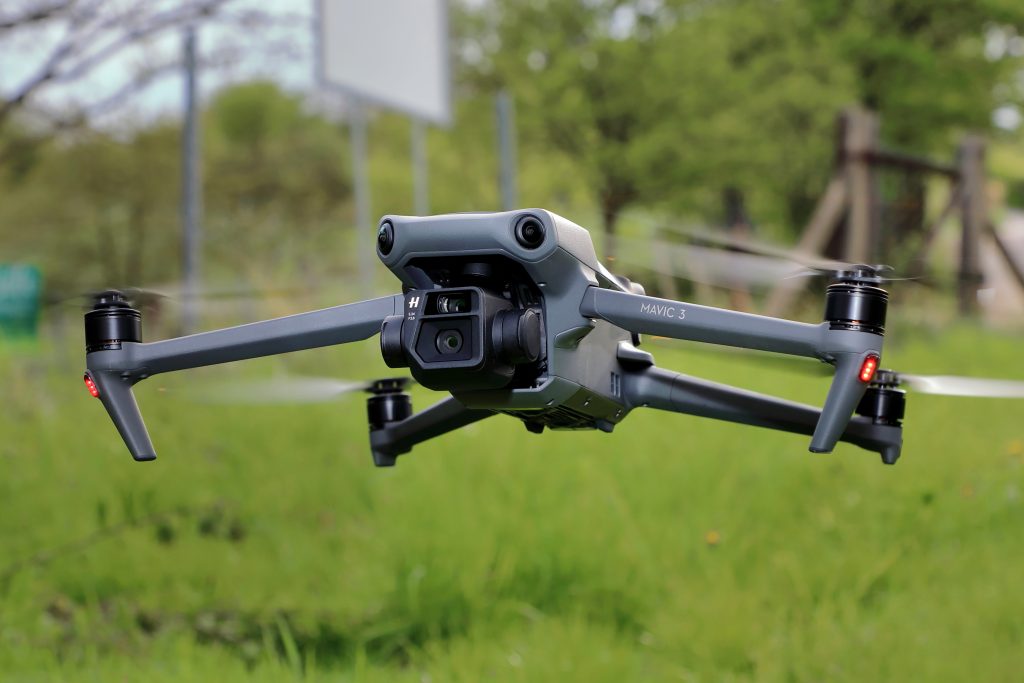
We are seeing this play out in the hardware market. DJI, despite the ongoing political theater in Washington, continues to iterate on systems like the Mavic 3 Enterprise and the Matrice series with increasingly sophisticated secondary sensors. Meanwhile, American companies like Skydio and specialized sensor firms like Iris Automation are betting big on the idea that the “brain” of the drone, its ability to sense and avoid other aircraft autonomously, is now more important than the airframe itself.
## The Ukraine Lesson
It is impossible to discuss the future of drone regulations without looking at the conflict in Ukraine. The war has turned into a high-speed laboratory for drone technology. We are seeing thousands of cheap, disposable aircraft operating in highly contested environments.
The FAA is watching this closely. The lessons learned about signal interference, autonomous navigation without GPS, and the sheer volume of air traffic are being baked into Western regulatory thinking. The “civil-military integration” mentioned in recent industry reports is not just a buzzword. It is a recognition that the tech being used to hunt tanks in the Donbas is the exact same tech that will be used to deliver your groceries in suburban Virginia.
## What Happens Next?
The final version of Part 108 is expected to go live by the end of this spring, with a phased implementation over the following year. For the average Part 107 pilot, not much will change immediately. You can still fly your DJI Air 3 for photography within sight of your controller.
But for the commercial sector, the floodgates are about to open. We are looking at a future where drone docks on top of buildings are as common as HVAC units. Where automated inspections of critical infrastructure happen daily, not annually. And where the term “beyond visual line of sight” stops being a legal hurdle and starts being the industry standard.
The transition will be messy. There will be high-profile “near misses” and ongoing debates about privacy and noise. But the regulatory momentum is now irreversible. The era of the waiver is dying, and the era of the autonomous sky is officially here.