
<
Why the Mavic 2 Pro Matters
uu
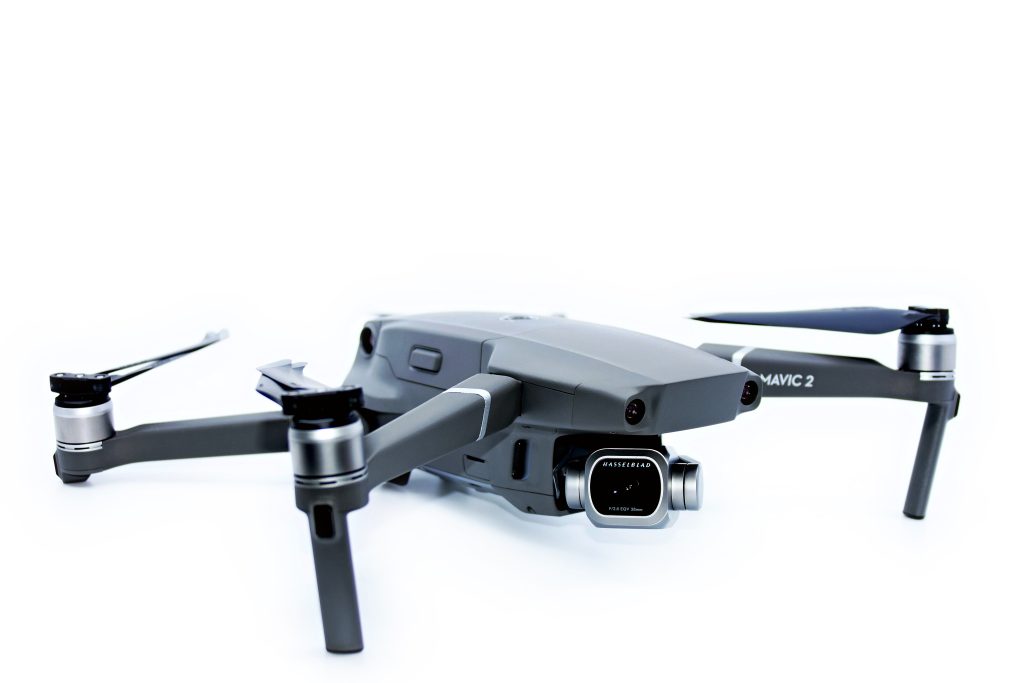
When DJI launched the Mavic 2 Pro in August 2018, it did something no other compact drone had managed. It put a 1-inch CMOS sensor and Hasselblad colour science into a package you could fold into a backpack. Before that, getting genuinely professional aerial footage meant hauling large gear or accepting mediocre image quality. The Mavic 2 Pro killed that trade-off.
uu
For many pilots, it was the drone that convinced them to take aerial photography seriously. YouTube creators, real estate photographers, inspection operators, and weekend hobbyists all converged on the same machine. At the time, 4K 10-bit video with Dlog-M and an adjustable aperture from f/2.8 to f/11 was a specification sheet that looked like science fiction from a drone this size.
uu
What End of Support Actually Means
uu
This is where a lot of panic happens, and most of it is unnecessary. DJI ending support does not mean your drone stops flying. Here is what actually changes after the support deadlines.
uu
What you lose: official repairs through DJI service centres, technical assistance via phone or email, firmware updates, and replacement parts ordered through official channels.
uu
What you keep: the ability to fly the drone, the DJI Go 4 app, existing firmware, third-party repair shops, and the second-hand market for batteries and accessories.
uu
Your Mavic 2 Pro is not bricked. It simply becomes your responsibility to maintain. For most owners who have been flying them for five or six years, this is already the reality. Batteries cycle-degrade. Propellers wear. Crashes happen and spare arms get ordered from third-party sellers. Practically speaking, the gap between “officially supported” and “unsupported” is smaller than DJI’s announcement makes it sound.
uu
That said, there are real implications for commercial operators. If you run a fleet for surveying, inspection, or public safety work, losing access to DJI repair channels means you need a backup plan. Insurance policies sometimes require manufacturers to maintain parts availability. Check your terms.
uu
The End-of-Support Timeline
uu
Four machines, two deadlines:
uu
- u
- Mavic 2 Enterprise Zoom: May 29, 2026
- Mavic 2 Enterprise Dual: May 29, 2026
- Matrice 600 Pro: May 29, 2026
- Mavic 2 Pro: August 31, 2026
u
u
u
u
uu
The enterprise models lose support three months earlier, which makes sense. These drones saw heavy, often brutal use in public safety and industrial settings. Their replacement cycle has moved on years ago.
uu
The Mavic 2 Pro gets until August, giving prosumer and creator users a bit more runway. DJI is also giving the Mavic 2 Pro, arguably its most culturally important consumer drone, a longer farewell.
uu
The Upgrade Question: What Comes Next
uu
This is what every Mavic 2 Pro owner wants to know. If you are finally ready to move on, here is the honest breakdown.
uu
DJI Mavic 4 Pro (Best Direct Upgrade)
uu
If image quality is your priority, the Mavic 4 Pro is the only genuine upgrade path. The sensor has grown beyond the Mavic 2 Pro’s 1-inch format, the processing pipeline is several generations ahead, and the obstacle avoidance actually works in real-world conditions rather than just marketing materials.
uu
There is a catch if you are based in the United States. The Mavic 4 Pro is not currently available for sale in the US due to ongoing restrictions on DJI products. American pilots are looking at alternative options.
uu
DJI Air 3S (Best Value)
uu
The Air 3S sits in an interesting spot. It features a 1-inch sensor like the Mavic 2 Pro, so you are not losing image quality by switching. You gain dual cameras (wide and medium telephoto), significantly improved obstacle sensing, longer real-world battery life, and a more modern controller with a built-in screen option.
uu
For Mavic 2 Pro users who are not chasing absolute maximum resolution, the Air 3S is probably the most sensible upgrade. It is also readily available in the US market.
uu
Autel EVO Lite+ (Non-DJI Alternative)
uu
If DJI’s regulatory situation in your country makes you nervous, Autel’s EVO Lite+ is worth considering. It matches the Mavic 2 Pro’s 1-inch sensor, offers 6K video, and comes from a manufacturer that currently faces fewer political headwinds in the US market. The software experience is not quite as polished, and the ecosystem is smaller, but the hardware is legitimate.
uu
Skydio 2+ (American-Made Option)
uu
Skydio takes a different approach entirely. Rather than matching sensor specs, they compete on autonomy. The Skydio 2+ has arguably the best obstacle avoidance of any sub-$2000 drone. Image quality is good rather than great, which matters depending on your work. For inspection, mapping, and public safety applications where the drone needs to fly itself through complex environments, it is a strong choice.
uu
The Matrice 600 Pro Angle
uu
The M600 Pro deserves its own moment. This hexacopter was the workhorse of an entire era. Before compact drones could carry cinema-grade cameras, the M600 Pro was the answer. It carried RED cameras, Ronin gimbals, and LiDAR payloads for companies building the drone surveying industry from scratch.
uu
Its replacement has not been a single product, but a category shift. The M350 RTK now handles industrial payload work, while compact drones like the Mavic 3 Enterprise have shrunk much of what the M600 Pro did to a fraction of the size. The M600 Pro’s retirement is symbolic of how far the industry has moved.
uu
Should You Sell Now or Keep Flying
uu
From a purely financial angle, used Mavic 2 Pro prices have not collapsed yet, but they will. Support-ending announcements tend to create a wave of sellers once the deadline approaches. If you want to sell, doing it before June 2026 makes sense.
uu
From a practical angle, the drone still works fine as long as it works fine. If your batteries are healthy, your gimbal is solid, and the image quality meets your needs, there is no technical reason to switch today. This announcement is about service, not functionality.
uu
The real reason to upgrade is not what you lose by staying. It is what you gain by moving forward. Better obstacle avoidance, longer flight times, more resilient connectivity, and image processors that actually handle complex lighting conditions. These are not marginal improvements. They change how you fly.
uu
What This Says About DJI’s Strategy
uu
DJI has been sunsetting older products at a steady pace for the past two years. The Phantom 4 series went in 2025. Multiple Matrice variants have already reached end-of-service. This is not a sudden shift in direction. It is the natural lifecycle of a hardware company that ships new products on 18-to-24-month cycles.
uu
The challenge for DJI is timing this right in the US market, where regulatory uncertainty means they might actually be pushing potential buyers toward competitors at exactly the moment those buyers are considering their next purchase. If you are a Mavic 2 Pro owner thinking about upgrading, and the Mavic 4 Pro is not available to you, that opens a window for Autel, Skydio, and smaller manufacturers that they do not want to leave open.
uu
Bottom Line
uu
The Mavic 2 Pro earned its place in drone history. It was the machine that proved you did not need to choose between portability and professional image quality. It launched careers, defined a visual style, and made thousands of people fall in love with flying.
uu
Support ending does not retire the drone. It just makes you the one responsible for keeping it airborne. For some pilots, that is fine. For others, it is the push they needed to finally step into the next generation of hardware.
uu
If you have been flying a Mavic 2 Pro for years, take it out this weekend. Fly somewhere you know. Get the kind of shots that reminded you why you bought it in the first place. The drone has earned that.
u