
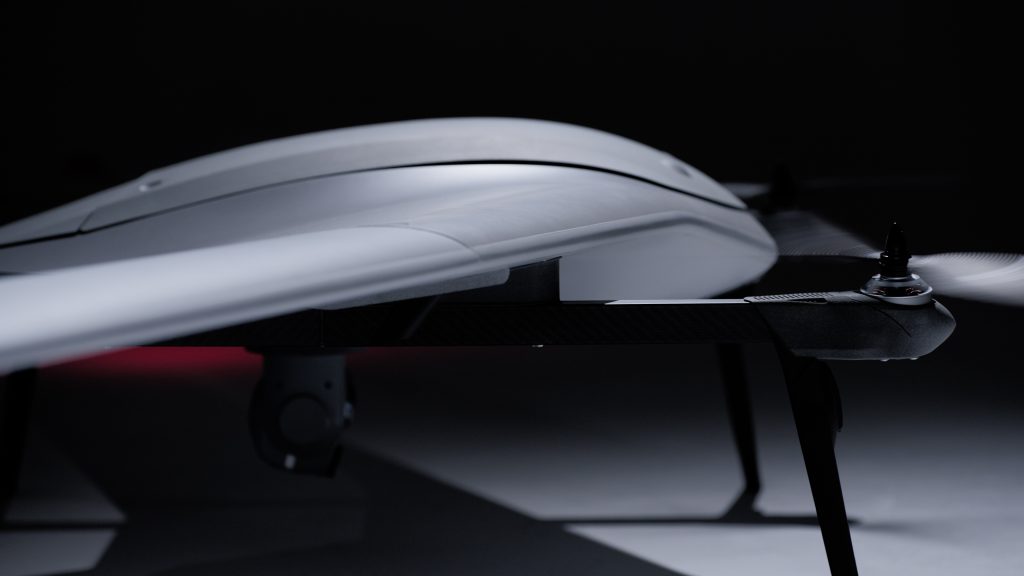
Dutch unmanned systems manufacturer DeltaQuad has unveiled the Evo-LE, a long-endurance variant of its electric fixed-wing vertical take-off and landing (VTOL) platform. Engineered specifically for persistent intelligence, surveillance, target acquisition, and reconnaissance (ISTAR) operations, the aircraft extends flight duration to eight hours on purely electric propulsion.
Drivetrain and Architecture Modifications
Reaching an eight-hour flight profile on a 13-kilogram maximum take-off weight (MTOW) airframe required systematic powertrain and structural modifications rather than merely expanding battery capacity. The Evo-LE incorporates higher-energy-density battery cells configured in a dual-pack architecture, paired with an overhauled internal power distribution network and an updated VTOL multi-rotor drivetrain.
The revised drivetrain optimizes power draw during the energy-intensive vertical launch and recovery transitions before engaging the forward pusher propeller for efficient fixed-wing cruising. The platform accommodates payloads up to 1.5 kilograms, supporting dual-sensor configurations without exceeding its operational weight limits.
Range and Communications
The Evo-LE boasts an operational flight range of up to 480 kilometers (298 miles). Command, control, and telemetry links maintain direct connection at ranges up to 120 kilometers, with support for tactical mesh networks, cellular relays, and satellite links where direct line-of-sight is obstructed by terrain or extended range requirements.
For contested electromagnetic environments, DeltaQuad offers optional electronic counter-countermeasures, including anti-jamming GPS receivers, inertial navigation fallbacks, and encrypted radios.
Block 3 Airframe Hardware Updates
The aircraft utilizes DeltaQuad’s Block 3 airframe standard, introducing several environmental and operational improvements:
- Environmental hardening: Upgraded composite construction provides enhanced ingress protection against rain, moisture, and dust, supported by an electronically heated pitot tube to prevent icing in cold conditions.
- Field serviceability: Quick-detach breakaway landing gear absorbs shock during hard landings or uneven terrain touchdowns, preserving the integrity of the lower fuselage and sensitive optical gimbal mounts.
- Regulatory compliance: Factory-installed navigation and anti-collision strobe lighting meet civil aviation visibility requirements for shared airspace integration.
- Retractable gear clearance: Automated landing gear retracts upon transition to forward flight, providing sensors with an unobstructed 360-degree field of regard.
Operational Deployment
DeltaQuad is positioning the Evo-LE for border surveillance, maritime patrol, wildfire monitoring, and tactical radio rebroadcast missions where launch and recovery infrastructure is unavailable. By eliminating pneumatic catapults and catch nets, two-person field teams can deploy and recover the platform from confined forest clearings, vessel decks, or forward operating locations.
Commercial and defense deliveries for the Evo-LE platform are open immediately, supported by direct factory training and maintenance lifecycle programs.