
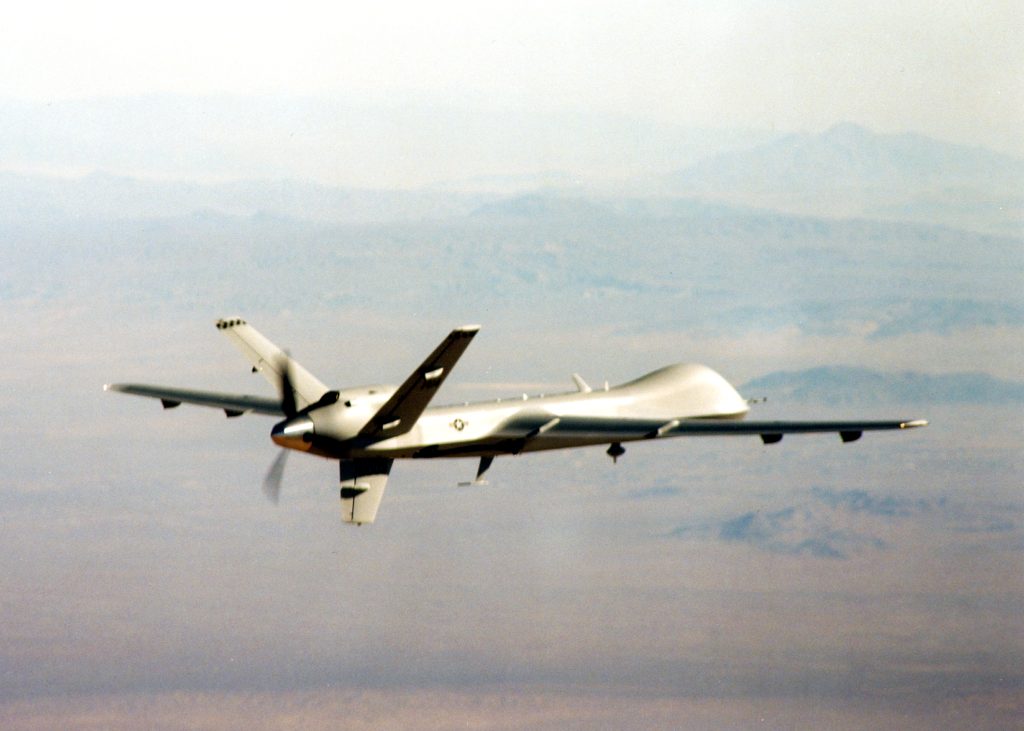
The Pentagon just dropped a financial hydrogen bomb on the drone industry. In a move that signals the end of the experimental Replicator era and the beginning of a permanent shift in how the United States prepares for combat, the Department of Defense has detailed its plans for the Defense Autonomous Warfare Group (DAWG). The price tag? A staggering $54 billion over the next five years.
From Replicator to DAWG: The Scale of Ambition
For the last couple of years, the Replicator initiative served as a proof of concept. It was the Pentagon’s way of saying it could move fast, bypass the usual bureaucratic sludge, and get thousands of small, cheap drones into the hands of warfighters. It worked. But Replicator was always designed as a pathfinder, not a permanent program of record.
Enter DAWG. While Replicator felt like a startup inside the building, DAWG is the corporate takeover. Led by Jules Hurst III, the acting undersecretary of defense, this new group is tasked with something much larger than just buying off-the-shelf quadcopters. It is a fundamental reorganization of drone procurement, aimed at achieving what Hurst calls ‘drone dominance.’
The numbers are almost difficult to process. We are looking at a 24,000% increase in funding for autonomous warfare initiatives compared to previous fiscal cycles. This is not incremental growth. This is a total pivot.
Evaluating, Purchasing, and Modifying
According to Hurst, the DAWG is not looking to reinvent the wheel. Its primary mission is to evaluate, purchase, and modify drone systems that are already in use or ready for the front lines. This is good news for the ‘American Drone Company’ cohort (think Skydio, Shield AI, and AeroVironment) which have spent years trying to prove that domestic production can keep up with the scale of the DJI-dominated hobbyist market.
The Pentagon’s focus is on three key areas:
- Attritable Swarms: Thousands of low-cost units designed to overwhelm enemy sensors and air defenses. If you lose fifty, you don’t file a report; you just launch fifty more.
- Autonomous Interceptors: Systems like the Merops or the newly launched AeroVironment Mayhem 10, designed to hunt and kill other drones without a human in the loop for every single flight adjustment.
- AI Integration: This is the backbone of the DAWG strategy. The goal isn’t just to have more drones, but to have drones that can communicate, prioritize targets, and navigate contested electronic environments without a constant GPS or radio link to an operator.
The Counter-Drone Conundrum
A significant portion of that $54 billion is not going toward things that fly, but toward things that stop them from flying. The Ukraine conflict has shown that the lifecycle of a single drone on a modern battlefield is measured in weeks, if not days. Electronic warfare (EW) is now a primary tier of combat.
DAWG is investing heavily in directed energy weapons, high-powered microwaves, and kinetic interceptors. The military knows that if it cannot protect its own assets from cheap FPV drones, it doesn’t matter how many billion-dollar jets it has on the tarmac.
Why $54 Billion Matters to You
If you are a Part 107 pilot or a hobbyist, you might think the Pentagon’s budget has nothing to do with your weekend flights. You would be wrong. This level of investment is going to drive the next decade of drone technology. The flight controllers, the batteries, the secure radio links, and the computer vision algorithms developed under DAWG contracts will eventually filter down into the commercial space.
We are also seeing a tightening of the regulatory net. The FCC’s recent updates to the ‘Covered List’ (which effectively bans foreign-produced UAS from certain government and infrastructure work) are part of the same national imperative that birthed DAWG. The US wants a domestic ecosystem that doesn’t rely on Shenzhen. With $54 billion on the table, the domestic industry finally has the incentive to actually build it.
The Risk: Cool Demos vs. Reality
There is, of course, a healthy dose of skepticism in the community. As some observers have noted, the military has a long history of falling in love with ‘swarm demos’ that look fantastic on a sunny day at a test range in Nevada but fail miserably when faced with real-world EW interference and mud.
The success of DAWG will depend on whether it can separate ‘cool demo technology’ from units that can actually survive a week in a high-intensity conflict. Hurst and his team have the money. Now they have to prove they have the eye for what works.
Conclusion
The launch of the Defense Autonomous Warfare Group is proof that the drone revolution is no longer a fringe element of modern strategy. It is the strategy. For the first time in a century, the economics of air power are shifting. The Pentagon is betting $54 billion that the future of the sky belongs to the autonomous, the numerous, and the cheap.