
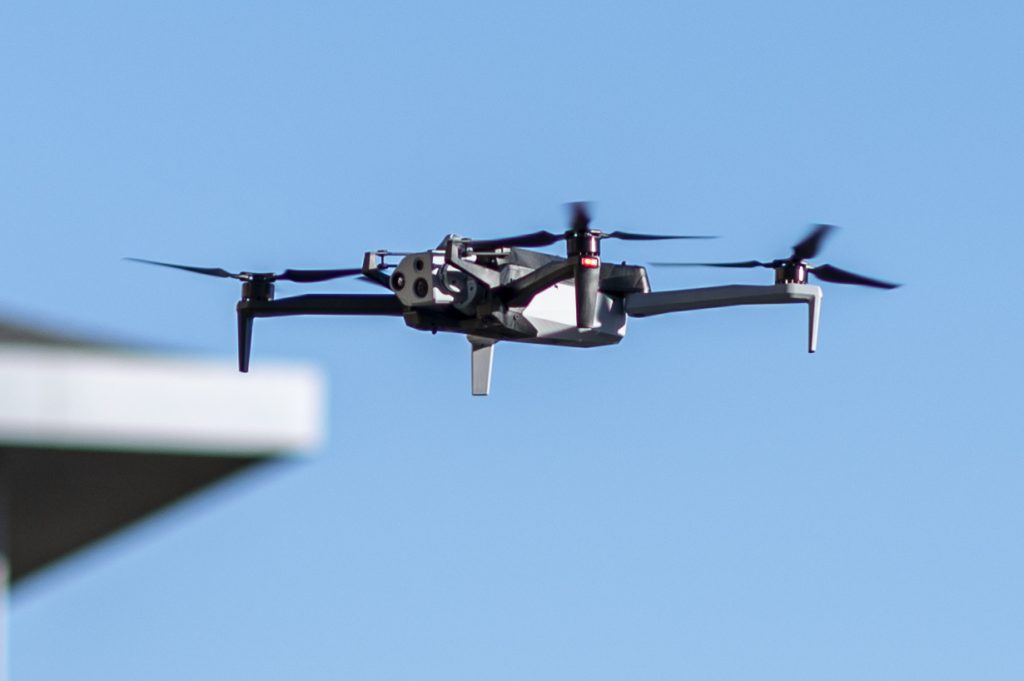
The Federal Communications Commission (FCC) has officially opened the floor for a high-stakes conversation about the future of American drone manufacturing. As of May 1, 2026, the agency is actively seeking public input on a series of proposed reforms designed to “unleash American drone dominance.” This move comes at a critical juncture for the industry, following years of tension over foreign-made hardware and a domestic supply chain that is still finding its feet.
The Shift Toward Domestic Sovereignty
For a long time, the drone market felt like a one-horse race. DJI, the Chinese technology giant, commanded a lead so significant that “drone” became almost synonymous with their brand for consumers and professionals alike. However, the regulatory environment has shifted dramatically. Under Chairman Brendan Carr, the FCC has doubled down on a “whole-of-government” approach to move away from what it deems national security risks in the airspace.
The new public notice explores everything from spectrum allocation to “innovation zones” where BVLOS (Beyond Visual Line of Sight) operations can be tested without the usual red tape. It is an ambitious attempt to bridge the gap between small-scale hobbyist flying and a scaled, industrial drone economy that lives and breathes on American soil.
Spectrum: The Invisible Infrastructure
One of the most technical but vital aspects of this proposal involves spectrum access. Right now, most civilian drones operate in the unlicensed 2.4 GHz and 5.8 GHz bands. If you have ever flown in a crowded urban environment or near a large industrial site, you know the frustration of signal interference. The FCC is investigating whether the 5030–5091 MHz band should be dedicated to drone control links to ensure reliability as we move toward autonomous delivery and long-range infrastructure inspection.
This is not just about avoiding “lost link” errors. It is about building a framework where thousands of autonomous systems can share the sky simultaneously. Without dedicated, licensed spectrum, the dream of automated drone nests and persistent aerial monitoring remains exactly that, a dream.
Innovation Zones and BVLOS
The notice also targets the slow pace of experimental licensing. Currently, getting a waiver to fly BVLOS can take months of paperwork and back-and-forth avec regulators. The FCC wants to create geographic “innovation zones” that act as sandboxes for real-world testing. This would allow companies like Skydio, Brinc, and Lockheed Martin to stress-test their systems in environments that mimic the complexity of city centers or remote industrial corridors.
By modernizing the experimental licensing framework, the FCC hopes to accelerate the development cycle of American hardware. The goal is to allow engineers to break things and fix them in the air, rather than on a spreadsheet.
The “Covered List” and the DJI Reality
We cannot talk about “drone dominance” without addressing the elephant in the hangar. The addition of several major foreign manufacturers to the FCC “Covered List” in late 2025 sent shockwaves through the industry. While existing drones were grandfathered in, the roadmap for new hardware is firmly Westdeck. This has created a massive opportunity but also a massive challenge for U.S. manufacturers.
Critics argue that banning the most capable and affordable hardware currently on the market leaves a vacuum that domestic companies are not yet ready to fill. Proponents, however, see this as the necessary “forcing function” to build a secure, resilient drone ecosystem that does not rely on components from geopolitical rivals. The feedback the FCC receives over the next few weeks will likely determine how aggressively these restrictions are enforced and whether exemptions will be granted for specific public safety use cases.
Scaling American Manufacturing
Can America actually build a fully domestic drone? Recent findings from the USGS regarding domestic lithium supplies suggest that we are starting to find the raw materials, but the bridge from raw minerals to a finished flight controller or battery pack is long. The FCC’s role in this is to ensure that once the hardware is built, the regulatory path to flying it is not the bottleneck.
The industry is already reacting. Skydio’s recent $110M Series F funding round signals that venture capital is betting big on the “Blue UAS” future. These systems are being deployed for everything from U.S. Air Force base security to bridge inspections in California. They are expensive, yes, but they represent a pivot toward data security and autonomous reliability that the market is beginning to demand.
What Happens Next?
The public comment period closes on May 1, with reply comments due by mid-May. After that, we expect the FCC to move toward formal rulemaking. For the average pilot, this might feel like high-level politics, but the outcome will dictate the radio frequencies you use, the drones you can buy for your business, and how easily you can fly them over the horizon.
The era of the “unregulated” skies is over. The era of domestic drone dominance is just beginning. Whether American industry can rise to the occasion remains the multi-billion dollar question.
Follow aerial.io for more updates as these regulations develop and new American hardware hits the flight line.