
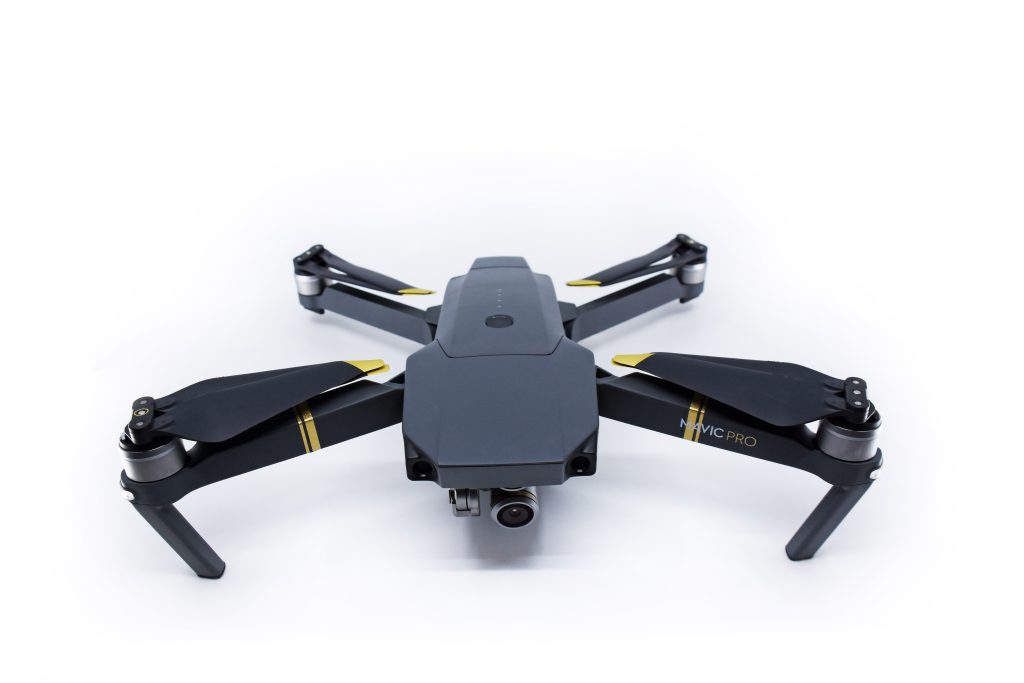
If you were hoping the US government’s crackdown on DJI would soften in 2026, the latest move from the Pentagon should reset those expectations.
On April 10, the Department of Defense filed a formal memo opposing any effort to reconsider the FCC’s decision to place foreign-made drone systems on its “Covered List.” This was not a routine objection. The memo revealed that the government’s position is backed by both classified and unclassified intelligence, including a classified annex submitted to Congress on April 3, 2026.
That is a significant escalation. Up until now, the DJI ban debate has largely played out in public, with companies, industry groups, and regulators arguing about data security risks, supply chain concerns, and the practical costs of locking out affordable drone hardware. DJI has consistently pushed back, calling the restrictions vague and technically unjustified.
Now, the Pentagon is signaling that there is more to the story than any of us can see.
What the Covered List Actually Does
The FCC’s Covered List, expanded in late 2025 under the Secure Networks Act and the FY2025 National Defense Authorization Act, is not just a warning label. Any device on the list cannot receive new FCC authorization. Without that authorization, it cannot be legally marketed or imported into the US.
For DJI, the consequences are concrete. New models cannot enter the US market. The Mini 5 Pro, the Air 3S, the Matrice 4, and any future systems are locked out unless the restriction changes. What is already in the country stays legal to fly. But the future pipeline has been cut off.
The list does not target DJI exclusively. The original determination, made in late 2025, covers all “foreign-produced unmanned aircraft systems and UAS critical components.” In practice, though, DJI dominates the global consumer and prosumer drone market so thoroughly that the impact falls mostly on its products and its customers.
The Classified Annex Changes the Legal Fight
DJI has been fighting this in court since February 2026. The company argues the restrictions are too broad, lack procedural fairness, and cause unnecessary harm to American businesses and first responders who depend on its products.
That legal strategy made sense when the government’s case appeared to rest on hypothetical risk. If there is no concrete evidence of misuse, the argument runs, then the burden falls on the government to prove the threat is real.
The Pentagon memo changes that calculation. Courts in the US give significant deference to national security agencies, particularly when classified intelligence is involved. Judges are generally reluctant to second-guess military and intelligence assessments, and when a classified annex exists that cannot be disclosed publicly, the scales tilt heavily toward the government’s position.
This is not speculation. It is a well-established pattern in national security law. DJI’s legal team now faces the uncomfortable reality that part of the case against the company may never be fully aired in open court.
Whether the classified intelligence represents a specific, documented threat or a more general geopolitical risk assessment is something the public cannot know. But the memo leaves little ambiguity about where the DoD stands, or about how difficult this fight is about to become for DJI.
Who Gets Hurt
The people feeling the squeeze most immediately are not adversaries or bad actors. They are first responders.
Public safety agencies across the US, including fire departments, police forces, and search-and-rescue teams, have built their drone programs around DJI hardware. The Mavic 3 Enterprise and the M30T are workhorses in this space, used in everything from wildfire mapping to missing persons searches. Replacing that hardware is not simple or cheap.
US-based alternatives exist. Skydio is the most visible domestic option, and Autel Robotics is technically an American company, though its Chinese ownership structure has drawn its own scrutiny from regulators. Neither matches DJI’s range or price point across all use cases, and both have shorter operational track records with large agency fleets.
The Blue UAS Cleared List, administered by the Defense Innovation Unit, provides a vetted pathway for government and public safety buyers. Around 20-plus systems are now approved on that list. For agencies that need to stay compliant, it is the clearest guide to what the government considers acceptable hardware.
The problem is that many organizations made significant investments in DJI equipment before these restrictions landed. They are now managing existing fleets while facing real uncertainty about long-term replacement costs. That is not a theoretical inconvenience. It is a budget problem hitting agencies that are already stretched.
The Exemption Window and Its Limits
Not everything is an outright block. The FCC, acting on Pentagon recommendations, has carved out limited exemptions for certain foreign-made systems that passed strict cybersecurity and supply chain reviews. Some drones from non-Chinese manufacturers have received case-by-case approvals.
But these exemptions are time-limited. Most expire by the end of 2026 or early 2027, creating a narrow and uncertain window for select companies to operate in the US market. They are a temporary measure, not a long-term solution.
And no Chinese manufacturer has cleared that bar. Not DJI. Not Autel. The review process exists, but the results so far have drawn a sharp line around Chinese-made hardware, regardless of technical performance.
This matters for the broader consumer market. DJI’s dominance has kept drone prices low and pushed innovation at a pace that few competitors can match. As buyers shift to alternatives, the market will take time to offer the same depth of affordable, reliable options across different use cases.
What the US Drone Industry Stands to Gain
There is an obvious beneficiary here: American drone manufacturers.
Companies like Skydio, Anduril, and a growing number of defense-focused startups are now operating in a market with significantly less competition at the mid-range and professional tier. The FCC’s push for domestic drone spectrum allocation earlier this year, combined with the DoD’s hard stance on foreign hardware, is creating a policy environment explicitly designed to grow domestic manufacturing capacity.
The US Army’s $52 million order for 2,500 Skydio X10D drones in March was a concrete signal of that direction. But enterprise military contracts and the needs of a commercial mapping firm or a weekend aerial photographer are not the same market, and scaling to serve both will take years.
New entrants are also moving in. Skyrover, a newer brand positioning itself as an American-market DJI alternative, filed with the FCC in April 2026 and is making clear it wants to capture the consumer space that DJI is being pushed out of. Whether it can deliver the product quality to back that claim is an open question.
What This Means If You Fly DJI Right Now
If you own a DJI drone today, you are not suddenly illegal. Existing hardware can still fly in the US under the same rules that have always applied. Your registration, your Part 107 license, your airspace authorizations, none of that changes.
What has changed is your buying horizon. If you are considering a new drone purchase and you want hardware with a clear, unambiguous future in the US market, the Blue UAS Cleared List is the safest starting point. It is not a complete list of everything available, but it tells you what has passed a government-level security review.
If you operate a business in the US that depends on drone services, now is the time to document your current fleet, plan replacement cycles, and keep a close eye on the DJI legal case. The litigation is ongoing and could shift the picture. But with classified intelligence now formally in the record, a reversal is significantly harder to achieve than it looked six months ago.
If you fly outside the US, including in Australia, Europe, or the UK, none of this directly affects your ability to buy or fly DJI products. These restrictions are a US regulatory matter, not a global one.
The Bigger Picture
This is not just about drones. The US government’s approach to DJI is one chapter in a much longer story about how connected, data-collecting devices from foreign manufacturers are treated in a security-conscious policy environment.
The same logic that pushed Huawei out of US telecom networks, restricted TikTok, and put pressure on other Chinese-linked technology platforms is now being applied to hardware that flies over homes, critical infrastructure, and government facilities while collecting high-resolution video and precise location data. Drones sit at the intersection of cameras, connectivity, mobility, and AI. That combination makes them a natural target for the same scrutiny applied to other connected technology.
DJI’s products are genuinely good. In many categories, they are still the best available at their price point. That makes the restriction frustrating for the millions of operators who have built workflows around DJI gear. But frustrating and reversible are not the same thing.
The Pentagon has drawn its line. The classified annex is on the record with Congress. Whether DJI can argue its way over that line through the courts is now the central question in the most consequential regulatory fight the drone industry has seen.