
The $1.5 Billion Handover: Why Motorola Just Bought the King of RF-Cyber
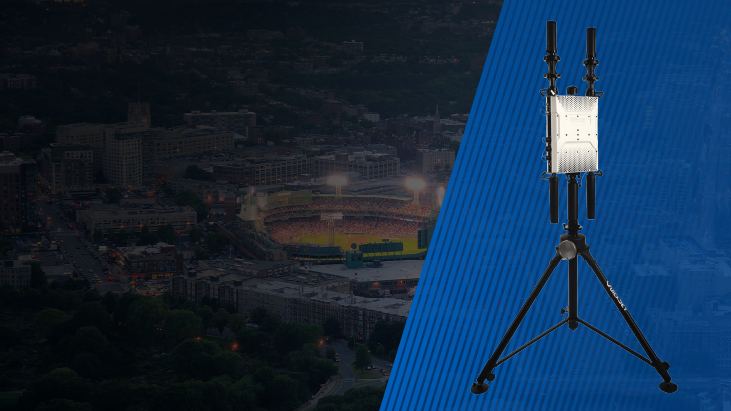
In a move that signals a tectonic shift in the counter-drone landscape, Motorola Solutions has announced a definitive agreement to acquire D-Fend Solutions for a staggering $1.5 billion. This isn’t just another corporate consolidation. It is a calculated land grab in the increasingly volatile battle for airspace sovereignty. D-Fend, the Israel-based pioneer of RF-cyber mitigation, has spent years perfecting a surgical approach to rogue drones. While other players were busy trying to jam signals or blast 400-gram plastic birds out of the sky with kinetic force, D-Fend was busy learning how to talk to them. Their flagship EnforceAir system doesn’t just stop a drone; it hijacks the connection, overrides the pilot, and forces a safe landing in a predefined zone.
Metaphorically speaking, Motorola just traded their hammer for a scalpel. By integrating D-Fend into their ecosystem, they are moving beyond simple detection and into the realm of intelligent control. This acquisition reflects a hard truth that the aviation industry is only now beginning to swallow: in the age of the consumer drone, traditional electronic warfare is too clumsy. Jamming a signal in a crowded urban environment or near an airport is like using a leaf blower to put out a candle. You might get the job done, but you are going to cause a lot of collateral damage to every other wireless system in the vicinity. D-Fend’s RF-cyber approach bypasses this, offering a clean, non-disruptive solution that fits perfectly with Motorola’s public safety and government client base.
The Safer Skies Act and the New Regulatory Reality
The timing of this $1.5 billion check is no accident. The FY 2026 National Defense Authorization Act (NDAA) included the Safer Skies Act, a piece of legislation that effectively hands the keys to drone mitigation to state and local law enforcement. Previously, the legal right to interfere with a drone’s flight path was a tightly guarded federal prerogative. Now, the barricades are coming down. Law enforcement agencies across the United States are looking for tools that allow them to protect stadiums, critical infrastructure, and public gatherings without violating federal wiretapping laws or causing massive signal interference.
Motorola Solutions is positioning itself as the primary provider for this new market. They already dominate the radio and dispatch systems used by almost every major police department in the country. Adding D-Fend to their portfolio allows them to offer a turn-key solution for airspace security. When a rogue drone appears over a sold-out NFL game, the responding officers won’t be looking for a confusing array of multi-vendor hardware. They will want a system that integrates seamlessly with their existing Motorola command center. By acquiring the most sophisticated mitigation technology on the market, Motorola has ensured that no competitor can easily disrupt their stranglehold on public safety tech.
RF-Cyber vs. The World: Why Jamming is Dead
For the uninitiated, the distinction between RF-cyber and traditional jamming might seem like semantics. It is most definitely not. Jamming is a brute force attack. It floods a frequency with noise until the drone loses its connection. The result is often an erratic flight path or a drone that simply falls out of the sky. In a combat zone, that is acceptable. In downtown Chicago or near Heathrow Airport, it is a liability. RF-cyber, on the other hand, is a dialogue. The system identifies the unique protocol of the drone, establishes a connection, and issues commands. It is the difference between a riot cop and a hostage negotiator.
D-Fend has mastered this dialogue across thousands of different drone models. Their tech is currently deployed in over 30 countries, protecting everything from military bases to international airports. Their growth has been explosive, with a 50% annual revenue increase over the last three years. Motorola isn’t just buying the hardware; they are buying the library of protocols and the years of R&D required to stay ahead of an ever-evolving drone market. As manufacturers like DJI introduce more complex encryption and frequency-hopping, the ability to surgically intervene becomes more valuable than ever. D-Fend represents the high-water mark of this capability.
The Future of Sovereignty: Hardware is Not the Bottleneck
This acquisition highlights a broader trend in the drone industry: the shift from hardware-centric thinking to software-led sovereignty. For years, the conversation was dominated by the drones themselves. Who makes them? Where are they built? While those questions still matter for supply chain security, the real power is shifting to the systems that control and manage the airspace. Motorola clearly understands that in the next decade, the person who controls the middleware controls the sky.
We are entering an era where the sky is no longer a passive void but an active, contested data layer. Whether it is delivery drones, medical transport, or malicious actors, the volume of traffic is only going up. A $1.5 billion investment suggests that Motorola expects the demand for sophisticated, non-kinetic mitigation to become a standard requirement for urban governance. They aren’t just preparing for today’s rogue drones; they are building the infrastructure for a future where autonomous flight is a utility, and protecting that utility requires the highest level of cyber-physical control. The message to the rest of the industry is clear: if you aren’t thinking about the protocol layer, you aren’t in the game.