
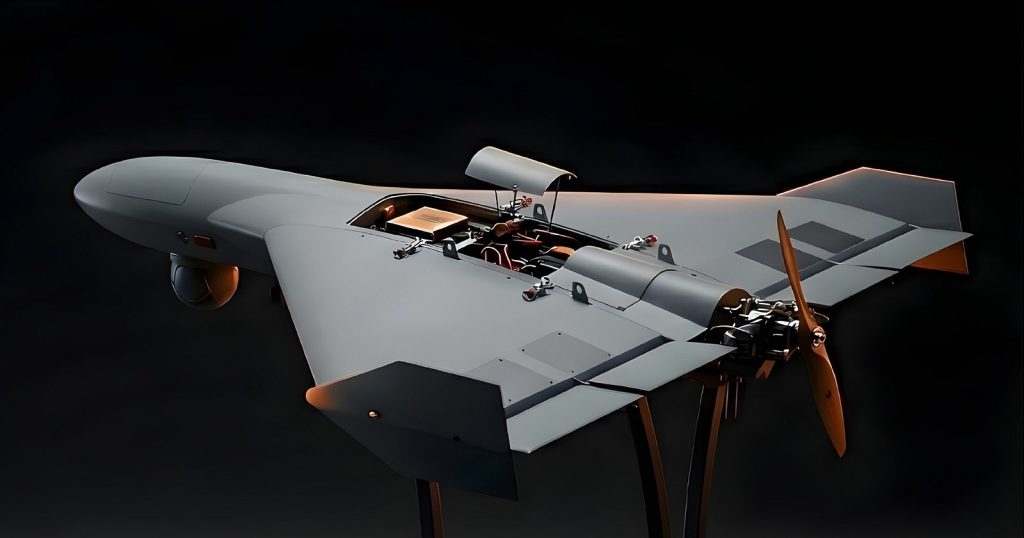
Kawa UAV, a defense startup operating out of the Uttar Pradesh Defence Industrial Corridor in Lucknow, completed the maiden flight test of its Divyastra Mk3 on August 16. The company is calling it India’s first fully indigenous jet-powered loitering munition, and for once the marketing language and the hardware roughly line up.
From AI Quadcopter to Jet-Powered Munition
The Divyastra line did not start here. Mk1 was a comparatively modest AI-assisted, low-cost drone built for the Indian Armed Forces, the kind of platform meant to get a startup through procurement doors rather than headlines. Mk2 followed with more ambition: high-speed taxi trials earlier this year backed a claimed range of 2,000 kilometers and a payload in the 80 to 100 kilogram range, depending on which outlet you trust for the spec sheet.
Mk3 is the jump that matters. Swapping a propeller for a jet engine changes the category entirely. Loitering munitions built around piston or electric propulsion are cheap and slow, fine for harassment strikes but easy to intercept. A jet-powered variant buys speed, altitude flexibility, and a flight profile that is harder to track and shoot down, at the cost of complexity most small manufacturers cannot swallow. Kawa UAV appears to have swallowed it.
Why This Matters Beyond One Test Flight
India’s defense procurement establishment has spent the last several years pushing indigenous alternatives to imported loitering munitions, largely because the war in Ukraine turned the category from a niche capability into a mainstream battlefield staple almost overnight. A domestically engineered jet-powered munition, if it survives the transition from prototype to production, gives the Indian Army a long-range strike option that does not depend on an import license or a foreign supply chain that can be cut off on short notice.
It also puts Kawa UAV in company with larger, better-funded Indian defense players who have been chasing the same autonomy-and-range problem from different angles. A first flight is not a contract, and plenty of promising Indian defense prototypes have stalled between test flight and induction. But a jet-powered airframe that actually flies is a harder thing to fake than a rendering, and this one flew.
What Comes Next
Expect the usual sequence: extended range and payload trials, integration work with whatever guidance and targeting suite the Army wants bolted on, and a long stretch of silence while procurement paperwork grinds forward. Kawa UAV has not published a production timeline, and neither the Ministry of Defence nor the Army has confirmed an order. For now, the achievement is the flight itself: a small Lucknow-based company building a jet-powered strike platform that most of its peers in the Indian drone sector are not yet attempting.