
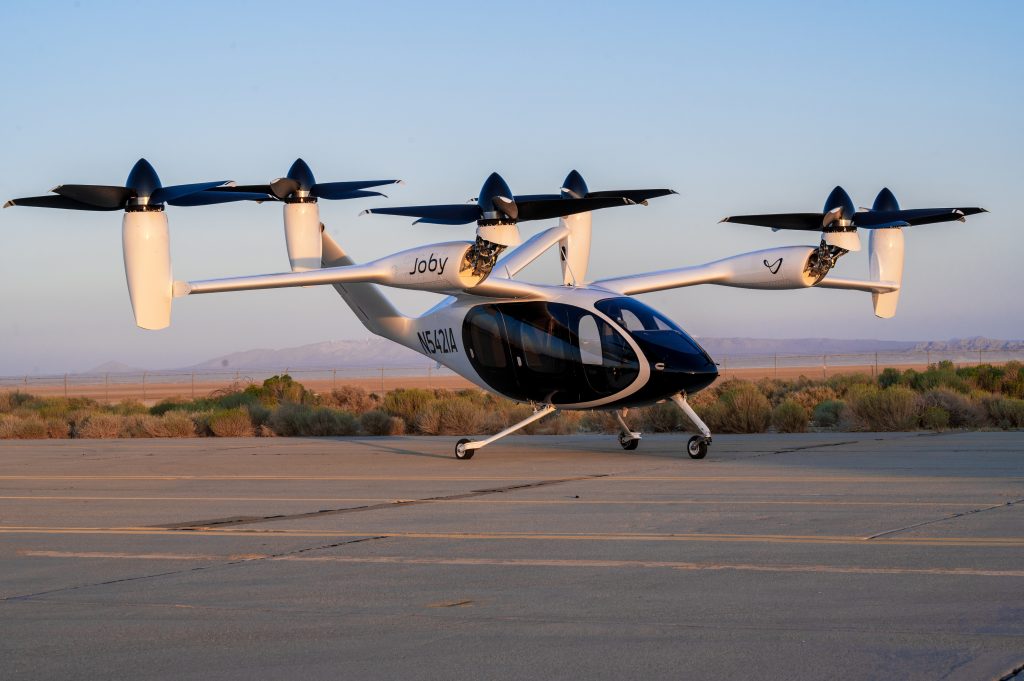
The skyline of New York City recently played host to a sight that was, until very few years ago, the exclusive domain of science fiction. A quiet, electric aircraft with six tilting rotors lifted vertically from the Downtown Manhattan Heliport, transitioned to wing-borne flight, and zipped across the East River without the bone-shaking roar of a traditional helicopter. This was not a hobbyist drone or a military prototype, but a production-conforming Joby Aviation S4.
For those tracking the Advanced Air Mobility (AAM) sector, the last few weeks have moved the needle from “if” to “when.” Joby Aviation has officially entered the final, most grueling phase of Federal Aviation Administration (FAA) certification. With its first conforming aircraft now in flight testing for Type Inspection Authorization (TIA), the company is clearing hurdles that have tripped up dozens of competitors over the last decade.
Crossing the Certification Gap
The path to certifying a new category of aircraft is a regulatory minefield. Most aerospace startups burn through hundreds of millions of dollars before they even reach the FAA’s third stage of certification. Joby, however, has become the first eVTOL developer to complete the third of five stages and is now deep into the fourth: testing and analysis. This is the stage where “for credit” data is generated. In plain English, these are the flights that the FAA uses to decide if the aircraft is safe for the general public.
The “conforming” label is the technical distinction that matters here. Previous prototypes were experimental rigs used to prove the physics. This new aircraft was built on a production line using the same parts, processes, and quality controls that will be used for the thousands of units Joby plans to build. When this aircraft flies, the FAA is looking at the actual product, not a science project.
The Physics of Quiet Flight
One of the primary barriers to urban air travel has always been noise. Conventional helicopters generate a distinct, low-frequency “thwack-thwack” sound caused by blade vortex interaction. It is loud, it is invasive, and it is why cities have strict limits on heliport operations. The Joby S4 operates on a different set of acoustics. By using six small, electric-powered rotors, the aircraft can vary the RPM of each motor individually. This allows the system to avoid the harmonic peaks that make helicopters so noisy.
During the NYC demonstrations, observers noted that the aircraft was virtually inaudible against the background noise of the city once it reached an altitude of 500 feet. For a commercial air taxi service to work, it has to be a good neighbor. Joby’s ability to blend into the urban soundscape is perhaps its greatest competitive advantage over Archer Aviation or the German-based Lilium.
Operational Infrastructure: Beyond the Aircraft
Building a flying car is only half the battle. You also need a place to land it, a way to charge it, and a system to maintain it. Joby recently secured its Part 145 Repair Station Certificate from the FAA. While that sounds like boring paperwork, it is a massive operational win. It means Joby is now authorized to perform maintenance and airframe repairs on its own fleet. Instead of being a manufacturer that sells units to others, Joby is positioning itself as a vertically integrated service provider, much like an airline that owns its own hangars.
The company is also working closely with Delta Air Lines to integrate air taxi hops into existing travel itineraries. The vision is simple: you book a flight from JFK to London, and your Delta app offers a 7-minute “shuttle” from Manhattan to the airport for a premium fee. It turns a two-hour traffic nightmare into a scenic hop.
The Military Connection
While the headlines focus on New York and Dubai, the U.S. Air Force is arguably the most important early adopter. Through the Agility Prime program, the military has been using Joby aircraft at Edwards Air Force Base to test logistics and medical evacuation scenarios. The military interest provides a crucial safety net of funding and flight hours. If the S4 can prove its reliability in the high-stakes environment of Air Force logistics, it builds a mountain of data that supports commercial certification.
The Air Force is particularly interested in the distributed electric propulsion (DEP). Because the S4 has six independent motors, it has high redundancy. If one motor fails, the remaining five can compensate to maintain a safe flight profile. For moving high-value cargo or personnel in contested environments, that triple-redundancy is a significant upgrade over a single-engine light helicopter.
The Road to 2026
Joby is targeting 2026 for the formal launch of commercial passenger service. There are still significant questions to answer. The transition from TIA testing to a full Type Certificate requires thousands of hours of flawless performance. Then there is the matter of the pilot shortage and the integration of these aircraft into an already crowded National Airspace System (NAS).
However, watching the S4 hover over the East River, it is hard not to feel that the era of the “flying car” has finally arrived. It is not the Jetsons-style bubble car we were promised, but it is something better: a real, quiet, and increasingly certified way to skip the gridlock. For the drone industry, this is the ultimate scaling up. The technology that started in our backyards with 200-gram quads is now carrying people across Manhattan.