
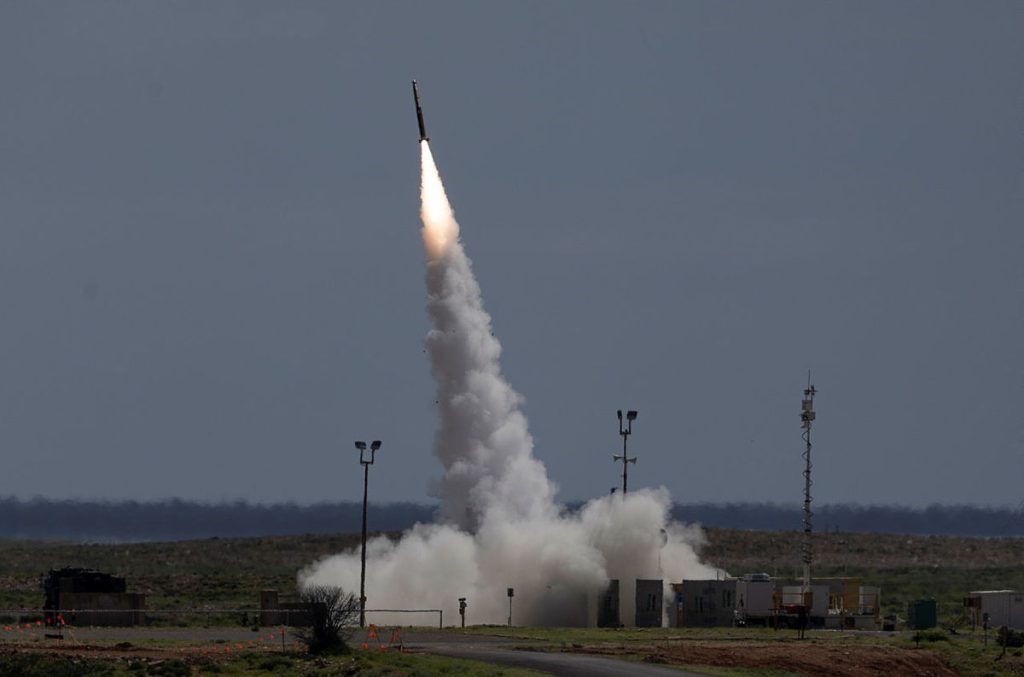
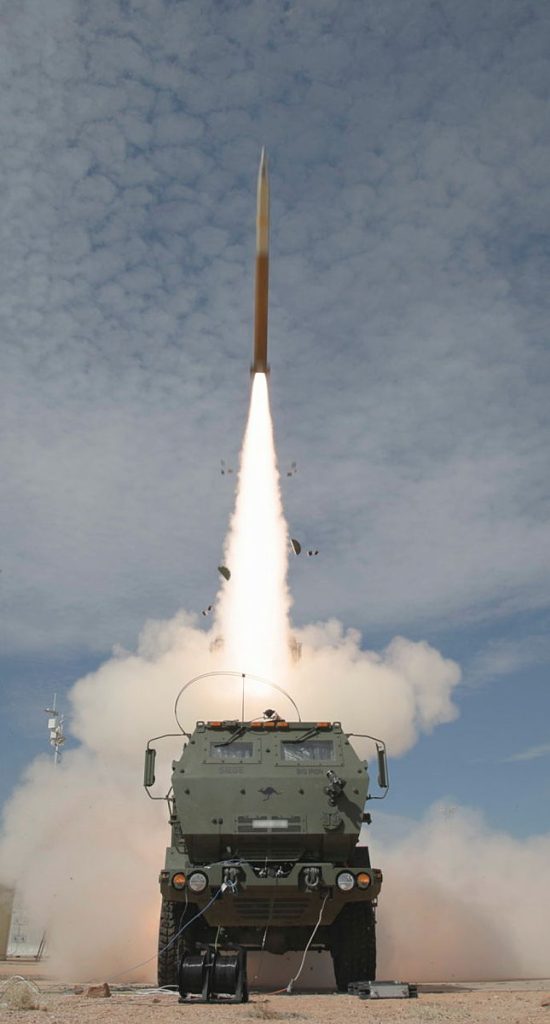
Australia came of age as a defence manufacturer on April 9, 2026, when the Australian Army successfully test-fired a domestically produced (Read: assembled) GMLRS missile from a HIMARS launcher at Woomera Test Range in South Australia.
The accomplishment marked the first time any nation outside the United States could produce this precision-guided weapon system. It also signaled a major step toward defence self-reliance, backed by a $320 million government investment. But what exactly is GMLRS? Why does domestic production matter? And where does this leave Australia in the global defence industrial landscape?
What Exactly Is GMLRS?
GMLRS stands for Guided Multiple Launch Rocket System. It’s a precision-guided munition that serves as the primary weapon for the M142 High Mobility Artillery Rocket System (HIMARS) and the larger M270 Multiple Launch Rocket System.
Think of it this way. Traditional artillery fires unguided shells that rely on the gunner’s calculations to hit a target area. GMLRS is different. It uses GPS guidance and a control system to adjust its flight path mid-air, allowing it to strike precision targets with remarkable accuracy.
The standard GMLRS rocket has these specifications:
- Range: 70 to 85 kilometers (43 to 53 miles)
- Warhead: 200-pound (90 kg) high-explosive unitary warhead
- Guidance: GPS/INS (Global Positioning System/Inertial Navigation System)
- Launch platform: HIMARS (6 rockets per launch pod) or M270 (2 rockets per launcher pod)
Australia currently operates 42 HIMARS launchers, acquired through the United States Foreign Military Sales program. The system entered service in March 2025, and the Woomera test on April 9 was the third live-fire exercise involving these platforms.
The Port Wakefield Facility
The new GMLRS production facility sits in Port Wakefield, South Australia. Officially opened in December 2025, the plant was constructed and brought online in just seven months. The speed surprised defence industry observers.
Key construction and fit-out work was carried out by Intract Australia, an Indigenous-owned company. The site was designed to meet US manufacturing standards, ensuring that Australian-produced GMLRS rounds are fully compatible with American inventories. This was not just about making missiles in Australia. It was about making missiles that meet the exact same specifications as those rolling off the Lockheed Martin line in Camden, Arkansas.
Before operations commenced, Australian engineers underwent specialized training at Lockheed Martin’s Camden facility. This technology transfer program was essential to ensure quality control and process certification.
The Port Wakefield site now supports approximately 20 on-site manufacturing roles. Additional employment is generated across a broader national supply chain as Australian suppliers are progressively integrated into component production.
Why Domestic Production Matters
Australia has historically purchased weapons off the shelf, with orders that could take years to arrive. This reliance on international supply chains becomes problematic during conflict or geopolitical tension.
Brigadier Jim Hunter, Director General of Guided Weapons Production Capability, articulated the shift in approach. He noted that in the past, defence procurement involved waiting years for foreign deliveries. The Port Wakefield facility changes that dynamic by enabling sovereign production capability.
By manufacturing missiles domestically during peacetime, Australia builds industrial capacity that can be expanded during crisis. This resilience is central to the National Defence Strategy, which emphasizes deterrence through credible long-range strike capability.
The April 9 test demonstrated that Australia now has sovereign capability to assemble, and one day, fully produce its own GMLRS missiles. If global supply chains were disrupted during a conflict, Australia could still maintain its HIMARS operations using locally manufactured munitions.
The Strategic Context
The GMLRS program sits within a broader $21 billion investment in the Guided Weapons and Explosive Ordnance (GWEO) enterprise over the next decade. This initiative is one of five major manufacturing programs identified in the 2020 Defence Strategic Review.
Minister for Defence Industry Pat Conroy emphasized the national security implications. Making missiles in Australia is central to Australia’s national defence resilience, he said. Australia is now the only country outside the United States to make the GMLRS missile, providing opportunities for Australian industry to enter into global supply chains.
This is not just about having missiles on hand. It is about positioning Australian defence industry within international supply chains that could serve allied partners during times of conflict. The European theatre in particular has shown sustained demand for precision-guided munitions since 2022.
Beyond GMLRS: What Comes Next?
The Port Wakefield facility is designed as a foundational industrial base for more advanced systems. Australia and the United States are currently discussing expanded local production capabilities beyond GMLRS, including:
- Precision Strike Missile (PrSM): A more advanced long-range weapon being developed by Lockheed Martin
- Hypersonic weapons: Exploration of domestic manufacturing capability for hypersonic systems
The 2029 target calls for a high-rate facility capable of producing 4,000 GMLRS missiles annually. This is a substantial jump from current production levels and would significantly expand Australia’s strategic autonomy.
Technical Certification and Quality Control
The facility currently produces GMLRS All Up Rounds and Launch Pod Containers. But the certification process is rigorous. Every missile must meet the same specifications as American-produced rounds, with quality checks at multiple stages of assembly.
The initial phase of GMLRS production serves as a risk-reduction activity to certify processes, training, equipment, and techniques. Once the baseline GMLRS program is fully qualified, the same infrastructure can be adapted for more complex weapons.
Australian authorities have indicated that the facility intends to meet both domestic operational requirements and export demand. The long-term objective involves embedding Australian industry within global guided weapons supply chains, creating commercial opportunities beyond defence procurement.
Industry Implications
The Port Wakefield program has spurred growth across multiple Australian defence contractors. Beyond Intract Australia’s construction work, numerous component suppliers are being onboarded for the broader production chain.
Lockheed Martin Australia was appointed as the prime contractor for the GWEO enterprise. This arrangement gives Australian industry access to advanced manufacturing processes and quality control systems that would be difficult to develop independently.
The program also creates a pathway for Australian engineers to work with cutting-edge guided weapons technology. Specialized training programs ensure that talent retention is possible within the local defence sector rather than losing skilled workers to overseas contractors.
Looking Forward
The GMLRS program represents more than a manufacturing achievement. It signals a fundamental shift in how Australia approaches defence industrial policy.
The $320 million investment that started this program is expected to grow as local content increases. Current production uses components that still originate from the United States, but plans are in place to manufacture parts locally and achieve complete tip-to-tail domestic capability.
If the 4,000-missile-per-year target by 2029 is achieved, Australia would have one of the most capable guided weapons manufacturing bases in the Indo-Pacific region. This capability could serve as a force multiplier for allied operations and create export opportunities with partners who share similar security concerns.
The first Australian-made GMLRS missile flew on April 9, 2026. This was just the beginning.