
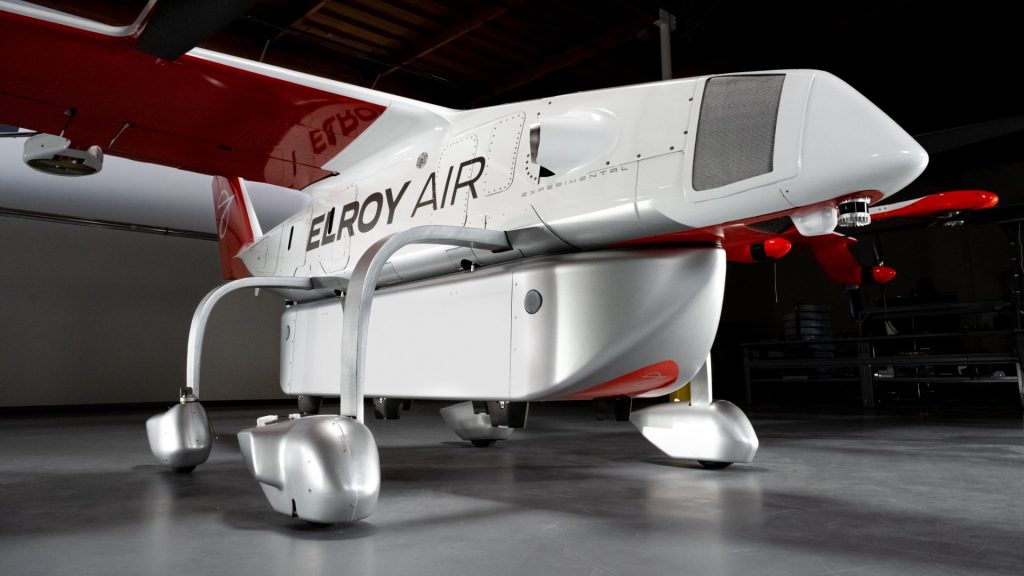
Moving 500 pounds of munitions or blood across 300 miles of contested airspace using an $80 million CH-47 Chinook or a crewed UH-60 Black Hawk is an expensive, tactically inefficient risk. The United States Army has recognized that burning aviation fuel and risking flight crews for routine tactical resupply in hostile operational environments makes little operational sense. To address this persistent logistical bottleneck, the Army awarded South San Francisco-based Elroy Air a multi-year development contract valued at up to 6 million to advance its Chaparral autonomous hybrid-electric VTOL aircraft.
The Physics of Contested Logistics
Modern distributed operations in anti-access/area-denial (A2/AD) theaters mandate dispersed, expeditionary forward operating bases. The core problem is sustaining these isolated nodes without relying on vulnerable maritime corridors or rigid, paved airfields. Conventional fixed-wing cargo aircraft require runway infrastructure that may not exist or will be quickly targeted by precision fires. Crewed utility helicopters provide vertical takeoff capability but suffer from high operational cost per flight hour, intensive maintenance cycles, and severe crew fatigue limits.
The Chaparral architecture approaches this problem from an engineering perspective: combine the vertical flexibility of multi-rotor lift with the aerodynamic efficiency of fixed-wing cruise, wrapped in a modular autonomous powertrain.
Hybrid-Electric Architecture and Pod Handling
Unlike battery-only electric vertical takeoff and landing (eVTOL) designs constrained by low energy density, Chaparral utilizes a hybrid-electric propulsion system. An internal combustion engine acts as a turbogenerator, feeding power directly to distributed electric motors for vertical lift and forward thrust while continuously buffering onboard batteries. This architecture delivers an operational combat radius of roughly 300 miles (480 km) carrying a 300 to 500-pound payload.
The airframe configuration utilizes eight dedicated vertical lift rotors mounted on twin longitudinal booms for hovering, takeoff, and landing phases. Once in transition, a high-efficiency pusher propeller drives forward cruise flight across a high-aspect-ratio carbon composite wing.
Crucially, the system eliminates ground-crew turn-around friction through autonomous cargo pod handling. The Chaparral does not require personnel to manually strap pallets into an internal bay under active fire. Instead, the aircraft taxis or lands directly over an aerodynamically streamlined, pre-loaded cargo container, latches onto the pod autonomously, executes its sortie, and deposits the container at the destination within minutes without needing human intervention.
Hardening for Denied Environments
The 6 million Army contract expansion directly targets the realities of high-intensity electronic warfare. The scope focuses on key software and hardware survivability requirements:
- GPS-Denied Navigation: Integration of inertial navigation systems, visual odometry, and terrain-referencing optical sensors to maintain precise waypoint tracking through intense RF jamming and spoofing environments.
- Cyber-Hardened Tactical C2: Robust, low-probability-of-intercept/low-probability-of-detection (LPI/LPD) communication channels that minimize RF emissions.
- Expeditionary Mission Planning: Lightweight, mobile mission planning software operable from ruggedized tactical edge tablets, allowing field units to task and redirect flights without a dedicated ground control station trailer.
- Autonomous Obstacle and Threat Evasion: Onboard flight computer processing to dynamically re-vector routing around pop-up anti-air threats and adverse weather.
The Strategic Shift in Tactical Resupply
The Department of Defense has increasingly elevated contested logistics from an unglamorous back-office supply problem to a primary determinant of operational endurance. As the Army tests and integrates autonomous VTOL systems into multi-domain operations, platforms like Chaparral demonstrate that unmanned cargo transport is shifting away from theoretical demos toward operational acquisition programs.
Replacing high-cost crewed sorties with expendable or low-maintenance autonomous platforms provides the distributed logistics persistence that modern peer-conflict doctrine requires.