
WingXpand and Verizon Accelerate Autonomous Disaster Response Deployment
The intersection of resilient telecommunications and autonomous aviation has long been the bottleneck in effective disaster management. When infrastructure fails, the ability to maintain airborne situational awareness often depends on fragile local networks. This week, WingXpand and Verizon signaled a shift in that dynamic. The two companies confirmed a partnership aimed at integrating the xRAI Smart Plane into the Verizon Community Disaster Resilience Innovation Accelerator, a move meant to harden the logistics of rapid crisis response.
The xRAI Advantage
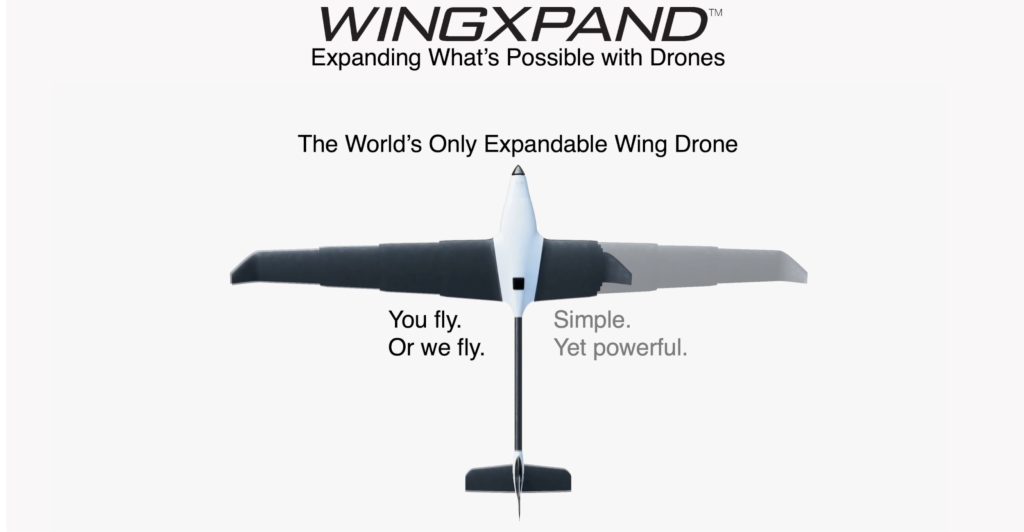
The WingXpand xRAI is not a typical multi-rotor drone. It is an expandable-wing aircraft that combines the flight efficiency of a fixed-wing platform with the portability required for tactical deployment. Fixed-wing aircraft inherently offer greater endurance and range than their quadcopter counterparts, yet their requirement for runways or large launch systems has historically limited their utility in debris-strewn disaster zones. WingXpand has solved this by utilizing a patented design that allows a full-sized aircraft to collapse into a backpack-portable form factor.
By partnering with Verizon, WingXpand is addressing the data side of the equation. A long-range aircraft is only as useful as the link that carries its sensor data back to commanders. The collaboration focuses on leveraging Verizon’s 5G and satellite-linked mobile assets to ensure that high-bandwidth video and telemetry from the xRAI can be distributed across agencies, even when traditional cellular towers are inactive.
Scalability in Crisis
Disaster response is moving toward an industrialization phase. It is no longer enough to have a single drone pilot searching for survivors. Modern emergency management requires a network of autonomous collectors providing a persistent overhead view. The xRAI Smart Plane is designed for this persistent role, capable of staying aloft for over two hours per flight. This allows for sustained damage assessment and search-and-rescue operations that would be interrupted by the frequent battery swaps required by smaller UAVs.
Verizon’s involvement suggests a push toward standardization. By integrating these platforms into a broader disaster resilience framework, the goal is to make autonomous aviation a integrated utility rather than a specialized luxury. The accelerator program specifically targets communities that are historically underserved by high-tech emergency services, aiming to provide a baseline level of autonomous capability that can be activated the moment a crisis begins.
Strategic Implications
For the broader aviation industry, the WingXpand-Verizon alliance is a template for the future of specialized logistics. While consumer drone delivery gets the headlines, the real-world application of BVLOS (Beyond Visual Line of Sight) technology is being perfected in the public safety sector. The regulatory path for flying over people and in complex environments is being paved by these “missions of necessity.”
As these systems become more ubiquitous, the challenge will shift from the aircraft itself to the orchestration of the airspace. With persistent platforms like the xRAI operating in the same low-altitude layers as traditional emergency helicopters, the need for integrated, semi-autonomous deconfliction becomes paramount. The collaboration with a telecommunications giant like Verizon is a logical step toward solving that connectivity and coordination problem at scale.
The deployment of the xRAI Smart Plane through this new accelerator is a clear signal that the novelty phase of emergency drones is over. We are now seeing the construction of the permanent overhead layer of our civil infrastructure.