
The Sky Just Got More Crowded (And More Profitable)
For over a decade, drone delivery has been the perpetual “five years away” technology. We have all seen the polished concept videos from retail giants and the small-scale lab tests that never quite made it to the neighborhood. But this week, the industry reached a definitive inflection point. Matternet, the Mountain View-based developer of the M2 drone system, has officially gone public. This is not just another funding round; it is the debut of the first publicly reporting pure-play drone delivery company in the world.
The transition happened via a reverse merger and a $33 million private placement, positioning Matternet as the flag-bearer for autonomous urban logistics. While the stock tickers and financial filings might seem dry to the average pilot, the implications are massive. This move signals that the technology, the regulatory framework, and the business model are finally mature enough for the harsh light of public markets.
The FAA Certification Advantage
To understand why Matternet is the one leading this charge, you have to look at the paperwork. In the world of commercial aviation, hardware is nothing without a Type Certificate. Matternet’s M2 drone is the world’s only delivery drone to be issued an FAA Type Certificate. This is a crucial distinction. It means the FAA has vetted every bolt, circuit, and line of code in the M2 to the same rigorous standards as a Boeing or an Airbus. Most other delivery startups are operating under temporary waivers or restrictive test certificates. Matternet is playing a different game entirely.
By securing this certification early, Matternet has built an insurmountable lead in the regulatory race. They are not just flying; they are operating networks in central London for the NHS, moving medical supplies in Zurich, and delivering fast food in Los Angeles. The $33 million they just raised is the fuel intended to scale these proven hubs into a global infrastructure.
Beyond the Hype: The Real Urban Logistics Stack
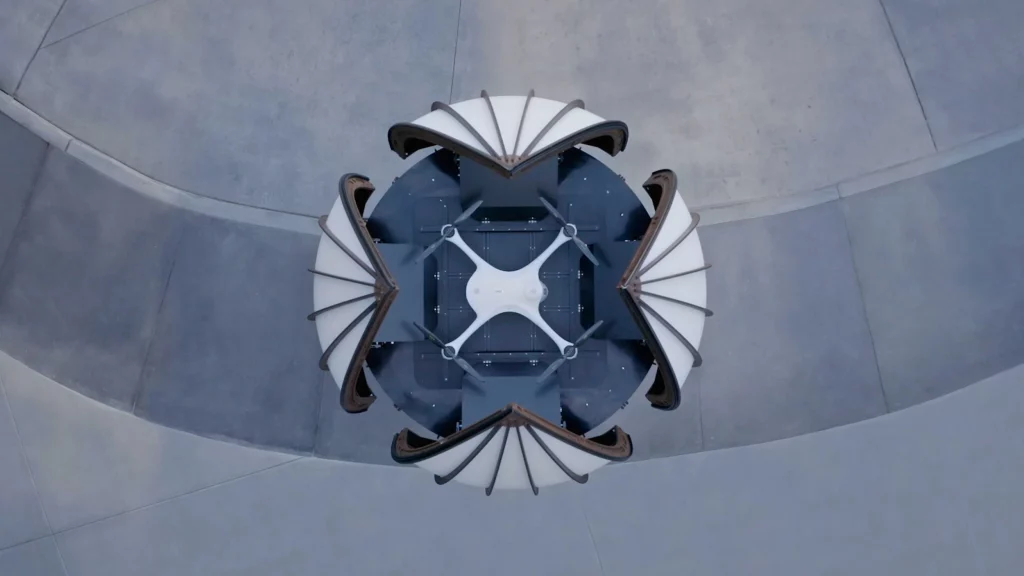
Matternet’s success is not just about the drone itself. The M2 is a capable machine, carrying 2 kilograms over a 20-kilometre range, but the real “secret sauce” is the integrated stack. Their system includes the Matternet Landing Station, an automated kiosk that handles battery swapping and package handoffs without human intervention. This is how you achieve real ROI. If you need a pilot and a ground technician for every single delivery, the economics will never work. By automating the ground ops, Matternet has turned a drone into a scaleable utility.
Their software platform acts as the air traffic controller for the entire network. It manages routing, monitors air traffic, and handles the handoffs between the drone and the station. For someone like myself, who has been watching this space for years, this is the infrastructure play we have been waiting for. It is the transition from “cool tech demo” to “boring, reliable delivery network.” And in logistics, boring is exactly what you want.
The First Move for Investors
Being the first pure-play public company in this sector is a calculated risk. Matternet will now have to report its numbers every quarter, revealing the true cost and revenue of every flight. But it also gives them the first-mover advantage in the capital markets. As investors look for ways to play the “low altitude economy,” Matternet is now the only dedicated option on the board.
This public listing also puts pressure on the competition. Companies like Wing and Zipline have massive backing but remain tucked away inside larger corporate structures or remain private. Matternet is exposing the raw economics of the business. If they can show a path to profitability in urban environments, we will see a massive wave of capital into the sector. If they struggle, it might cool the market for everyone.
Conclusion: A New Era of Aviation
The Matternet public debut is more than a financial milestone. It is a validation of the vision that small, electric, autonomous aircraft can and will redefine how matter moves through our cities. We are moving away from the era of two-ton trucks delivering two-ounce sandwiches. The sky is open for business, and Matternet just claimed the first seat at the table.
Stay tuned to Aerial.io as we track Matternet’s first few quarters on the market. The drone delivery war is just getting started, and for the first time, we can all watch the scoreboard.