
The long-haul aviation landscape is undergoing a surgical transformation. For decades, the industry operated on a rigid binary system: narrowbody aircraft for short hops and massive, fuel-thirsty widebodies for anything crossing an ocean. That era is officially over. With the recent entry into service of the Airbus A321XLR, the “long and thin” route strategy has moved from a boardroom whiteboard to a tangible global reality.
The delivery of the first A321XLR to Saudia in May 2026 marks more than just a fleet update for the Middle Eastern carrier. It represents a fundamental shift in how airlines think about connectivity. By packing 4,700 nautical miles of range into a single-aisle airframe, Airbus has handed airlines a weapon that bypasses the traditional constraints of the hub-and-Spoke model.
The Saudia Milestone: A New Benchmark for Narrowbody Luxury
Saudia’s recent induction of its first A321XLR has raised eyebrows across the industry, not just for the timing, but for the configuration. The airline has opted for a high-specification layout that includes a 24-suite business class cabin. This is a clear signal: the narrowbody is no longer the “budget” option for long flights.
For a carrier based in Jeddah and Riyadh, the XLR is the perfect tool to reach deep into Europe, Africa, and parts of Asia without the risk of flying a half-empty Boeing 787 or Airbus A350. The economics are brutal and beautiful. A carrier can operate a flight with 140 to 180 passengers at a fraction of the trip cost of a widebody, maintaining high frequencies that business travelers demand.
Saudia is using these aircraft to target secondary cities that previously required a connection. This is the heart of the “long and thin” strategy. Why funnel a passenger from a secondary city through a massive hub like Dubai or Doha if you can fly them direct on a plane that is actually profitable at lower volumes?
The “Long and Thin” Strategy Explained
In aviation parlance, a “long and thin” route is one that covers a vast distance but lacks the passenger volume to support a 300-seat widebody. Historically, these routes were the graveyards of airline profitability. You either flew a large plane half-full (losing money) or forced passengers to connect (losing customers to competitors).
The A321XLR solves this. With an 11 person crew and significant fuel savings, roughly 30% lower fuel burn per seat compared to previous-generation competitor aircraft, the XLR makes these marginal routes viable.
Take the transatlantic market as the primary example. We are seeing a proliferation of routes like Raleigh-Durham to Paris or Hartford to London. These are not mega-hubs. They are “thin” routes that the XLR can fly profitably year-round. This decentralization of the global network is the most significant change to aviation since the introduction of the jet engine.
Technical Prowess: How Airbus Did It
The secret to the XLR’s range lies in the Rear Center Tank (RCT). Unlike the optional additional center tanks in the A321LR, the RCT is a permanent part of the fuselage structure. It holds 12,900 liters of fuel, taking up less space than traditional tanks and allowing for more baggage and cargo capacity while pushing the maximum takeoff weight (MTOW) to 101 tonnes.
However, this range came with challenges. Regulators, particularly EASA, voiced concerns about fire safety and evacuation times related to the structure of the RCT. Airbus spent much of 2024 and 2025 refining the design, adding protective casing and structural reinforcements. The version delivered to Saudia and other early adopters is the result of these rigorous safety compromises, proving that the narrowbody can indeed handle eight to nine hours of flight time without compromising safety.
Impact on Global Hubs
Does the A321XLR mean the end of mega-hubs like Heathrow or JFK? Not quite. But it does mean they lose their monopoly on long-distance travel.
Hubs will always exist for massive volume, but the XLR allows airlines to pick off the high-yield, point-to-point traffic. For the passenger, this is a win. Less time spent in security lines at connecting airports and less risk of lost luggage. For the airline, it reduces the complexity of managing massive connecting banks and the associated ground handling costs.
We are seeing United Airlines and American Airlines lean heavily into this. Their orders for the XLR are designed to replace aging Boeing 757 fleets, but they are doing more than just replacing old metal. They are opening routes from cities like Newark or Philadelphia to deep-central Europe and even South America that were previously unreachable for narrowbodies.
Actionable Takeaways for the Industry
The arrival of the A321XLR is a wake-up call for two specific groups:
1. Secondary Airports: Now is the time to invest in premium lounge facilities and international processing. The XLR is bringing the world to your doorstep. You no longer need to be a major hub to host 4,000-mile flights.
2. Passenger Experience Designers: Flying eight hours in a narrowbody can feel cramped if not handled correctly. Airlines that win with the XLR will be those that invest in the cabin experience, Airspace interiors, decent seat pitch, and high-speed connectivity, to mitigate the “tunnel” effect of a single-aisle plane.
The Verdict
The Airbus A321XLR is the most important commercial aircraft of the decade. It is not the biggest, nor the fastest, but it is the most disruptive. By enabling the long and thin route strategy, it has decentralized global air travel and given airlines a scalpel where they previously only had a sledgehammer.
As Saudia’s new fleet begins to crisscross the globe, the message is clear: the future of long-haul is no longer just big. It is smart, efficient, and increasingly narrow.
The Economic Engine: Trip Costs vs. Seat Costs
To understand the A321XLR’s dominance, one must look past the shiny new cabin and into the airline’s ledger. The traditional widebody model relied on low seat costs (CASK) through massive volume. This worked well for London to New York, but failed for almost everywhere else. The XLR flips this by offering remarkably low trip costs.
For an airline executive, the trip cost is the total expense of moving the plane from point A to point B. If a widebody costs $80,000 to fly a route and the XLR costs $35,000, the “break-even” point drops dramatically. This lower risk profile allows airlines to be audacious. They can open routes to cities like Dakar, Recife, or Bergen that would never support a 787. This economic flexibility is the true “X-Factor” of the XLR. It provides a buffer against economic downturns; when passenger numbers drop, a narrowbody stays profitable long after a widebody starts bleeding cash.
The Pilot Perspective: Handling the 101-Tonne Single-Aisle
Flying the A321XLR is a different beast for the flight crew compared to the standard A321neo. With a maximum takeoff weight of 101 tonnes, the aircraft feels “heavier” on rotations and requires precise energy management during the initial climb. Pilots transitioning from widebodies appreciate the commonality with the rest of the A320 family, which reduces training costs for airlines, but they must also respect the unique performance characteristics of a plane that is carrying nearly 13,000 liters of fuel in its belly.
The flight deck remains consistent with the A320neo family, featuring the latest Thales or Honeywell avionics and the signature sidestick controllers. However, the mission planning for an eight-hour narrowbody flight involves more complex contingencies. With only one aisle, cabin service takes longer, and crew rest management becomes a logistical puzzle. Many airlines are opting for a “business-heavy” layout specifically to reduce the number of passengers and ensure the crew can maintain a high standard of service without feeling overwhelmed by the limitations of a single-aisle galley.
Operational Flexibility: Beyond the Atlantic
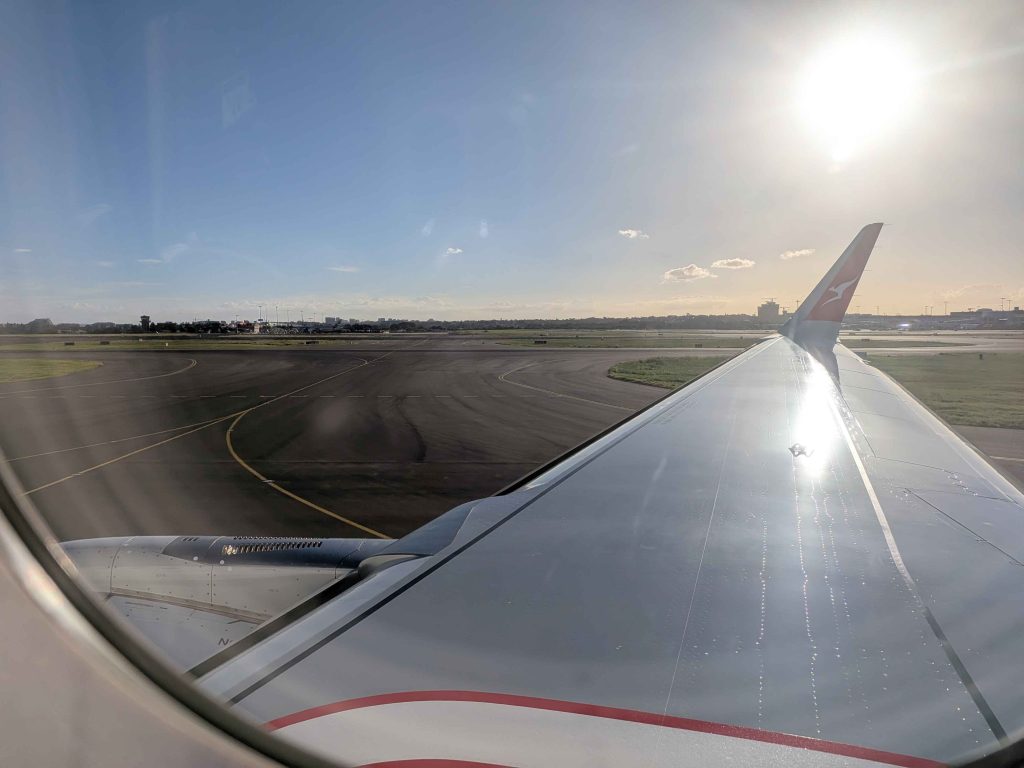
While much of the early A321XLR hype focused on the North Atlantic corridor, the true potential of the aircraft lies in connecting distant city pairs across Asia, the Pacific, and Africa. Qantas, for instance, is eyeing the XLR to link smaller Australian cities like Perth and Adelaide directly to Southeast Asian hubs and even parts of India. This is a game changer for travelers in secondary markets who were previously forced to route through Sydney or Melbourne.
The aircraft is equally transformative in the Asian market. New routes between Hokkaido in Japan and major hubs in Southeast Asia, or direct links between Central Asian cities and Europe, are now within technical and economic reach. This operational flexibility allows carriers to experiment with seasonal routes and respond to shifting demand with far less financial exposure than a widebody operation would require. By removing the necessity of the hub, the XLR is effectively redrawing the map of global trade and tourism.
Conclusion: The Architecture of a Post-Hub Era
The Airbus A321XLR is not merely an incremental improvement in aviation technology; it is the catalyst for a structural shift in global connectivity. By decoupling long-range capability from high passenger volume, Airbus has empowered airlines to build networks based on passenger preference rather than operational necessity. The “hub-and-spoke” model, while far from dead, is no longer the only path to profitability for long-haul carriers.
For the traveler, this means more direct flights, less time wasted in crowded terminal transitions, and a premium experience on aircraft formerly reserved for short-haul duty. For the industry, it represents the ultimate tool for risk management and market expansion. As more XLRs enter service in the coming years, the sky will become more accessible, more efficient, and fundamentally more connected. The era of the surgical, “long and thin” network has arrived, and it is here to stay.