
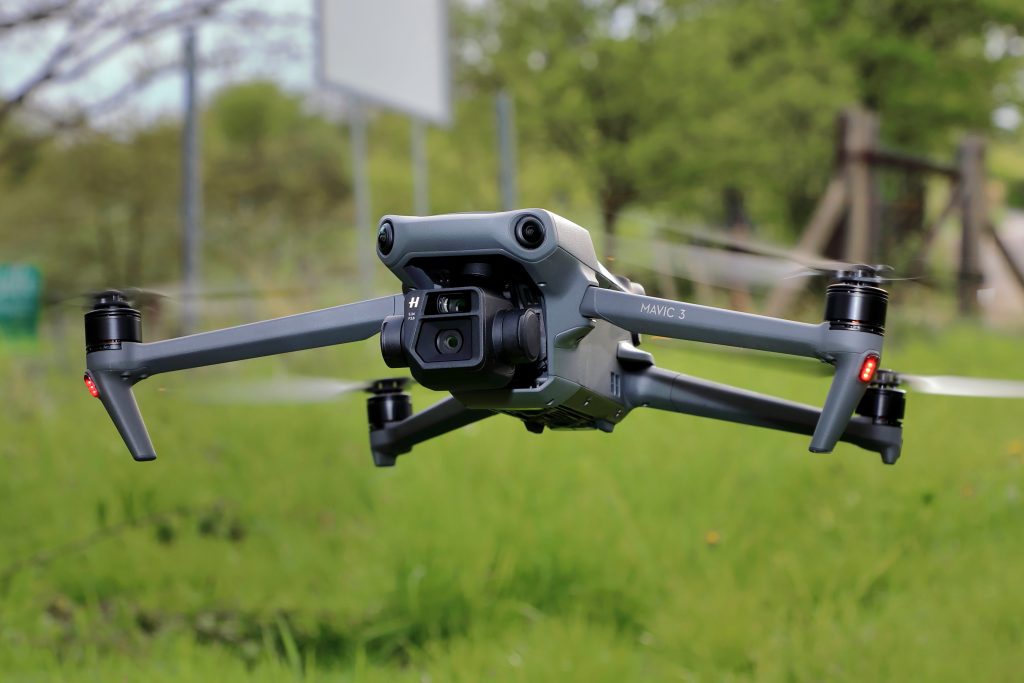
The Federal Communications Commission (FCC) is currently navigating a policy minefield that could fundamentally alter the American drone industry. At the heart of this conflict lies a glaring contradiction: if foreign-made drones from DJI and Autel Robotics are the immediate national security threats that Washington claims, then why are they still legally operating in almost every corner of the country? This is the central question posed by the Drone Service Provider’s Alliance (DSPA) in a recent filing that challenges the logic of a blanket ban.
The Contradiction of the “Immediate” Threat
Washington has spent the better part of the last two years escalating its rhetoric against Chinese drone manufacturers. Lawmakers and regulators point to concerns over data privacy, firmware control, and the potential for foreign intelligence agencies to access sensitive flight information. These are not trivial concerns, and the industry widely acknowledges that cybersecurity is a legitimate front in modern aviation. However, the regulatory response suggests a disconnect between the perceived risk and the operational reality.
If a product is truly an unavoidable national security risk, the standard procedure is an immediate grounding or a recall. Yet, DJI drones remain the primary tools for public safety agencies, infrastructure inspectors, and agricultural researchers across the United States. Thousands of flights occur daily, many of them over critical infrastructure, under the current legal framework. The DSPA argues that the FCC cannot maintain a policy that claims these aircraft are categorically unsafe while simultaneously allowing them to remain the backbone of the domestic drone ecosystem.
Beyond Binary Thinking
The current debate often collapses into a binary choice: American drones are safe, while foreign drones are dangerous. This lacks the nuance required for effective aviation policy. A drone is a collection of hardware, software, and data links. The risk profile of a flight depends significantly on the mission and the connectivity of the device. A drone flying a mapping mission in a remote forest without an active internet connection presents a vastly different risk profile than a cloud-connected aircraft flying near a military installation.
The DSPA is advocating for a “risk-appropriate framework.” Instead of broad bans based on the country of origin, the industry is calling for universal cybersecurity standards that apply to all manufacturers. This would include mandatory local-only data modes, transparent firmware verification, and robust encryption. By focusing on the technology rather than the manufacturer, the US could secure its skies without decapitating an industry that has grown dependent on specific platforms.
The Cost of a Sudden Pivot
The economic reality of the American drone landscape is heavily skewed toward a single manufacturer. Estimates suggest that over 90 percent of commercial operators and public safety agencies rely on DJI hardware. This dominance isn’t just about price; it’s about a mature ecosystem of sensors, software integrations, and pilot training. For a small business or a local police department, a sudden ban isn’t just an equipment change. It is a total workflow disruption.
Replacing a fleet involves more than just the purchase price of new aircraft. It requires retraining pilots, migrating data systems, and validating new equipment for specific industrial tasks. For many small operators, these costs could be terminal. The DSPA survey data suggests that nearly a quarter of drone-related businesses would likely fold if a broad ban were implemented without a significant transition period. The collateral damage of a poorly managed ban could be the very domestic drone industry that Washington is trying to protect.
Public Safety and Economic Stability
Public safety agencies are perhaps the most vulnerable group in this regulatory tug-of-war. From search and rescue to wildfire monitoring, drones have become essential life-saving tools. These agencies often operate on tight budgets and lengthy procurement cycles. A federal mandate that effectively grounds their current fleet without providing a clear, affordable path to domestic alternatives puts lives at risk. Emergency responders need certainty, not a shifting landscape of waivers and temporary approvals.
The American drone industry is at a crossroads. The need for better cybersecurity and a more diverse manufacturing base is clear, but the path forward must be grounded in operational reality. A “risk-appropriate” approach that mandates high security standards across the board would protect national interests while allowing the commercial sector to continue its growth. As the public comment window closes, the FCC has an opportunity to choose a path of sophisticated regulation over the blunt instrument of a blanket ban. The future of American commercial aviation depends on getting this balance right.