
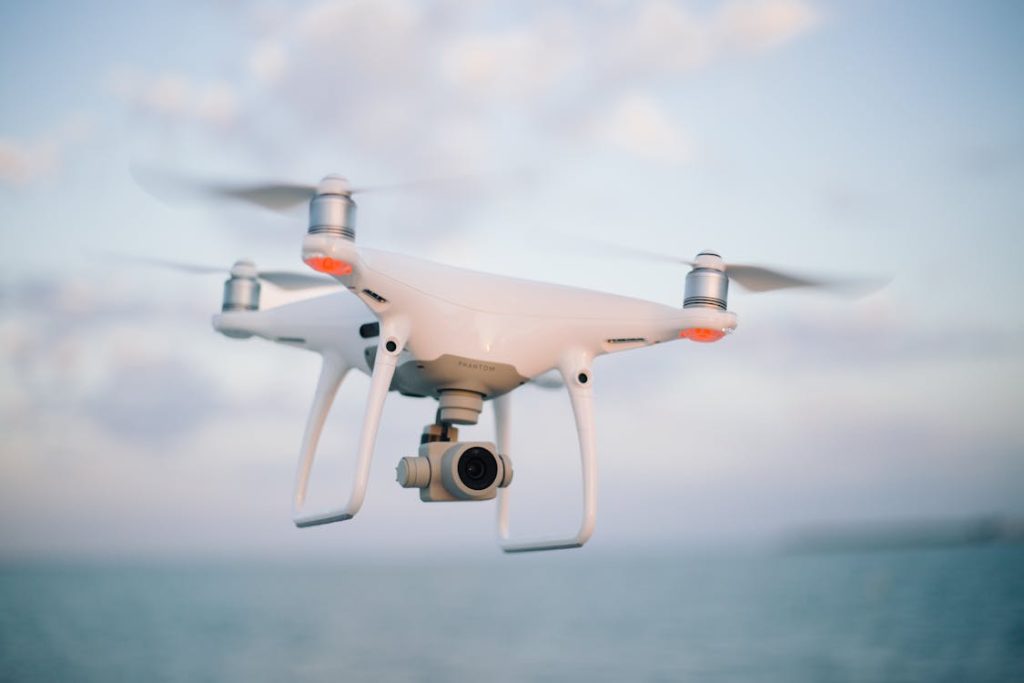
Doubling the Range: How Lithium-Metal Batteries are Rewriting the Rules of Drone Warfare
The limiting factor of any unmanned aerial system is rarely the airframe or the avionics. It is the fuel. For the battery-powered platforms that dominate modern battlefields, this means flight endurance is measured in minutes rather than hours. While liquid fuel systems offer higher energy density, they bring noise, heat signatures, and mechanical complexity. The holy grail has always been a battery that matches the energy density of chemical fuels.
Sion Power might have just moved the goalposts.
The recent launch of the Licerion Strike and Echo cells represents a potential shift in how we think about tactical drone operations. These lithium-metal battery cells claim to exceed 500 Wh/kg. To put that in perspective, the high-end lithium-ion cells currently powering most industrial and military drones hover between 250 and 300 Wh/kg. We are looking at a near-doubling of energy density in a single generational jump.
The Lithium-Metal Difference
Most of us are familiar with lithium-ion technology. It is the reliable workhorse of the consumer electronics world. But lithium-ion has a ceiling. The graphite or silicon anodes used in these batteries are heavy and take up physical space. Lithium-metal batteries replace those host materials with a thin foil of metallic lithium.
The result is a cell that is significantly lighter and more energy-dense. For a drone operator in the field, this translates into three specific advantages:
Sion Power is targeting two distinct mission profiles with their new lineup. The Licerion Strike is designed as a primary (non-rechargeable) cell, optimized for maximum energy delivery in one-way missions. This makes it a perfect fit for loitering munitions and tube-launched assets where reliability and shelf-life are paramount. The Licerion Echo, on the other hand, is a secondary (rechargeable) cell built for the high-cycle demands of ISR (Intelligence, Surveillance, and Reconnaissance) drones that need to fly daily.
Flipping the Economics of the Battlefield
The implications for modern conflict, particularly in environments like Ukraine, are profound. Drone warfare has become a game of numbers and endurance. If a reconnaissance unit can keep eyes on a target for twice as long with the same number of batteries, the tactical advantage is massive.
Moreover, high energy density changes the design philosophy of the drones themselves. When battery weight is less of a constraint, engineers can afford to add more redundancy or better shielding against electronic interference. It allows for the use of more power-hungry onboard processing, which is essential for the transition toward fully autonomous flight and terminal guidance in GPS-denied environments.
The Scaling Challenge
As with any “breakthrough” battery technology, the skepticism usually lands on two points: safety and scalability. Lithium-metal has historically been prone to dendrites—tiny, needle-like structures that grow during charging and can cause short circuits or fires. Sion Power claims their proprietary separators and electrolyte formulations have solved this stability issue, at least for the specialized requirements of the defense industry.
Scalability is the next hurdle. Manufacturing at 500 Wh/kg is one thing in a laboratory or small-batch facility. It is another thing entirely to produce these cells at the scale required to fuel thousands of tactical drones. However, the military application provides the perfect incubator. The Department of Defense is often willing to pay a premium for performance that would be cost-prohibitive in the consumer market. Once the production processes are refined for military contracts, we typically see that technology bleed down into the high-end enterprise and commercial sectors.
Looking Ahead: A New Standard for Endurance
We are entering an era where the “battery-powered” label no longer implies a compromise in capability. While 500 Wh/kg was once considered a distant target for the 2030s, the speed of development in the unmanned sector has pulled that timeline forward.
For the drone industry, this is the hardware equivalent of a major software update. It doesn’t just make existing drones better; it enables entirely new classes of missions. We may soon see “micro-MALE” (Medium Altitude, Long Endurance) platforms that can launched from a backpack but stay aloft for half a day. In the high-stakes world of aviation and defense, that kind of performance isn’t just an improvement. It is a revolution.
The sky is getting crowded, and with this new level of endurance, the drones that are up there are going to be staying a lot longer.