
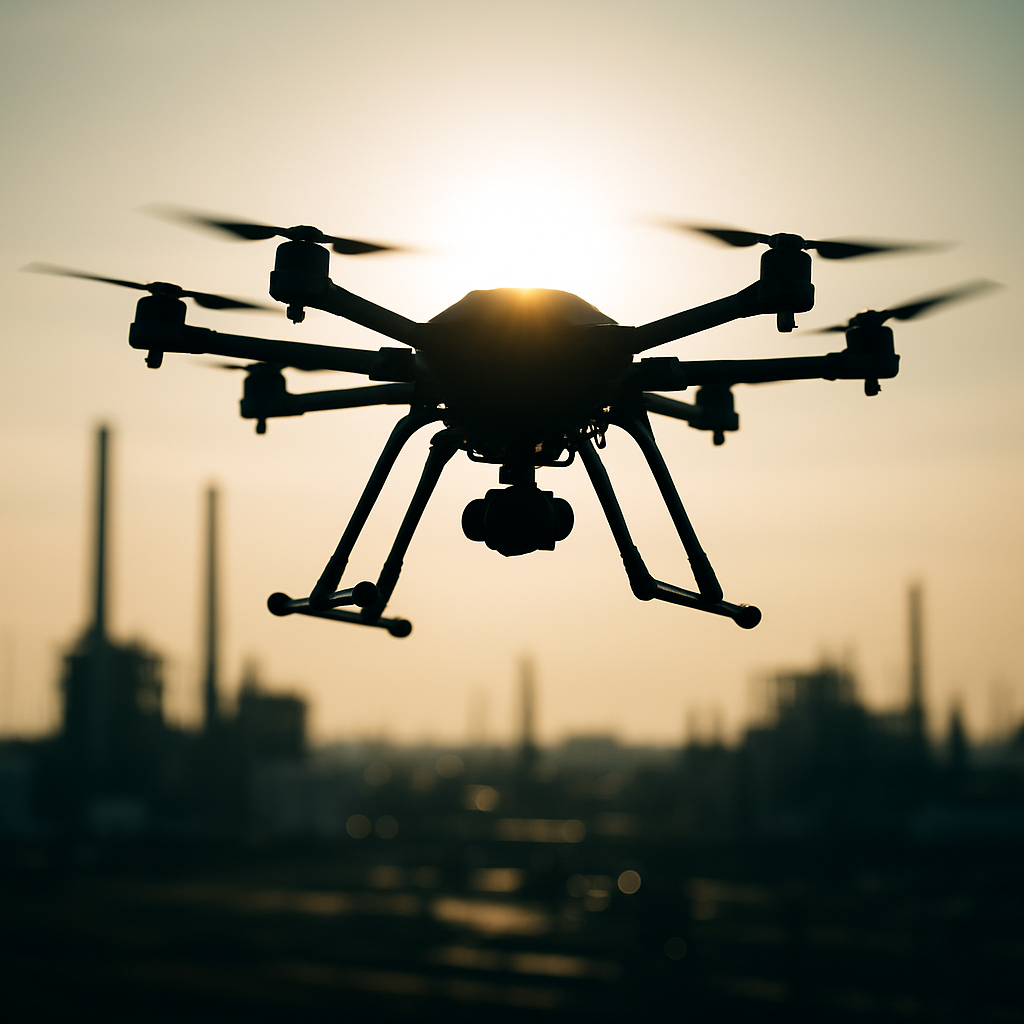
The regulatory ceiling for the American drone industry is finally lifting. For years, the requirement to maintain a visual line of sight has been the single greatest hurdle for commercial drone operations in the United States. While specialized waivers allowed a handful of companies to fly beyond the pilot’s direct vision, the process was slow and expensive. This week, the Federal Aviation Administration (FAA) signaled that the era of the individual waiver is ending as it nears the finalization of Part 108. This new framework will normalize Beyond Visual Line of Sight (BVLOS) operations, effectively turning a bureaucratic exception into a standard industry practice.
The transition is not just a minor adjustment to existing rules. It represents a fundamental shift in how the FAA views unmanned aircraft systems. For over a decade, the agency has operated on a “see and avoid” principle, where the responsibility for collision avoidance rested entirely on the pilot’s eyes. Part 108 moves the industry toward “detect and avoid,” which uses sensors and software to maintain safety. This change is the key to unlocking the true economic potential of drones in the United States, allowing operations to scale in ways that were previously impossible due to human visual limitations.
The Death of the Waiver Era
Under the current Part 107 framework, flying a drone where the pilot cannot see it is technically prohibited unless the operator holds a specific waiver. These waivers, while achievable, require mountains of paperwork and proof of safety systems that are often beyond the reach of smaller enterprises. The industry has long argued that this limitation prevents drones from reaching their true potential in field mapping, infrastructure inspection, and delivery services. The current system was never intended to be a long-term solution; it was a patchwork fix while the FAA gathered data on safety and reliability.
Part 108 is the FAA’s response to this bottleneck. Instead of forcing companies to prove their safety case on a per-flight or per-organization basis, the new rules establish a set of standard operating procedures and technical requirements. If an operator meets these criteria, BVLOS flight becomes a routine capability. This shift is expected to trigger a massive wave of industrial adoption, as the cost of compliance begins to drop significantly. Small businesses that were previously locked out of the BVLOS market will soon have a clear pathway to expanded operations, fostering competition and innovation across the sector.
Technical Demands and Automated Safety
The transition to Part 108 is not just a change in paperwork. It demands a higher level of technical sophistication from the aircraft and the command stations. One of the central pillars of the new regulation is the requirement for Detect and Avoid (DAA) systems. Since the pilot is no longer the primary lookout for other aircraft, the drone itself must carry the sensors and processing power to identify and steer clear of manned aviation. This requires a combination of radar, lidar, and computer vision that can operate in real-time under various lighting and weather conditions.
We are seeing a rapid shift toward integrated radar and vision-based DAA hardware. Manufacturers like Skydio and DJI have already been preparing for this moment, building autonomy engines that can navigate complex environments without human intervention. Part 108 will likely mandate specific performance standards for these systems, ensuring that any drone flying beyond vision can safely integrate into the national airspace without relying on luck or empty skies. The implementation of these standards will force many legacy drones out of the commercial market, but it will also drive a new generation of aircraft that are safer and more capable than anything we have seen before.
The Role of Remote IDs and Spectrum
Complementing the new BVLOS rules is the continued rollout of Remote ID. While controversial among some recreational pilots, Remote ID provides the digital license plate necessary for the FAA and law enforcement to monitor an increasingly crowded sky. For commercial operators, it is the price of admission for the freedom to fly miles away from the controller. It allows the FAA to maintain a level of accountability that is essential for public trust in autonomous systems. Without a way to identify who is flying where, the widespread adoption of long-range drones would be a security nightmare.
Furthermore, the FCC has recently been active in carving out dedicated spectrum for drone command and control. Reliability is everything when a hundred-thousand-dollar hexacopter is flying ten miles away. Using standard 2.4GHz or 5.8GHz Wi-Fi bands is sufficient for a park flight, but industrial BVLOS requires the kind of signal integrity only found in protected frequencies. The alignment of FAA flight rules and FCC spectrum allocations suggests a coordinated push to professionalize the sector. This ensures that the communication link between the pilot and the aircraft is not interrupted by the interference that plagues unlicensed consumer bands.
Industrial Impact: From Energy to Agriculture
The sectors most likely to benefit immediately are those involving linear infrastructure. Power line inspections, which currently require crews to drive thousands of miles or use expensive helicopters, can soon be handled by long-range drones hovering over hundreds of miles of cable in a single session. The same applies to oil and gas pipelines, where leak detection becomes a task for a programmed flight path rather than a manual survey. The efficiency gains are massive, reducing both the cost and the environmental impact of maintaining critical national infrastructure.
In agriculture, the ability to monitor vast tracts of land from a centralized hub changes the economics of precision agriculture. Instead of a pilot standing in every field, a single operator can oversee a fleet of drones covering multiple farms. This scalability is what will finally move drone technology from a niche tool to a fundamental part of the American industrial stack. Farmers will be able to receive real-time data on crop health, soil moisture, and pest infestations across thousands of acres, allowing for more targeted use of water and chemicals. This not only improves yields but also makes farming more sustainable in the long run.
The package delivery sector is another area poised for a revolution. While the “drone on every doorstep” vision is still a few years away, Part 108 provides the regulatory foundation for middle-mile logistics. Drones can move medical supplies, blood, and time-sensitive organs between hospitals with a speed that ground transportation cannot match. By removing the need for a pilot to maintain visual contact, the FAA is opening the door for autonomous delivery networks that can operate 24/7, regardless of traffic congestion or road conditions.
Conclusion: The Path Ahead
The message to the industry is clear: the rules are catching up to the technology. While the final text of Part 108 is still being polished, the direction of travel is certain. The drone industry is no longer just about taking photos or racing through gates; it is about becoming a critical piece of the transportation and mapping infrastructure. For those who have been waiting for the green light to scale their operations, that light is finally starting to glow. The next few years will be a period of intense activity as companies rush to certify their aircraft and update their operating manuals.
However, the transition will not be without its challenges. The industry must continue to prove that its systems are as safe as the manned aircraft they share the sky with. Public perception also remains a factor; the sight of drones flying overhead without a pilot in sight will take some getting used to. But the benefits, in terms of safety, efficiency, and economic growth, are too great to ignore. The era of the short-range drone is ending, and the era of the autonomous, long-range aerial robot is just beginning. It is a future that has been promised for a long time, and it is finally within our reach.