
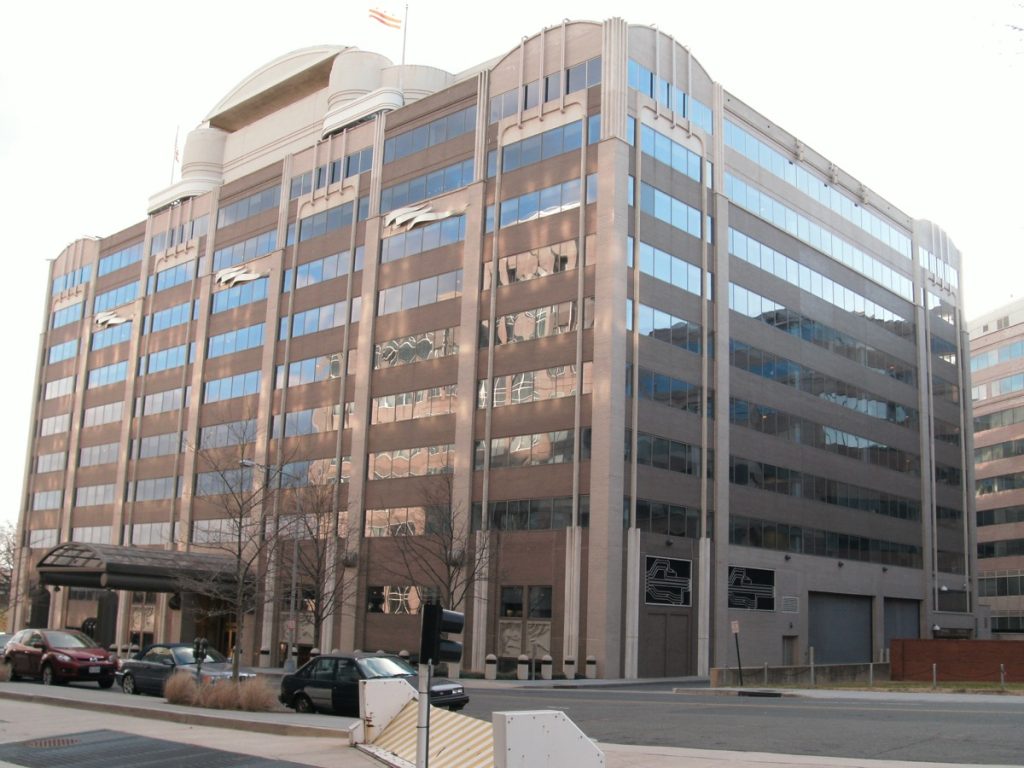
The Federal Communications Commission voted on October 29, 2026, to eliminate a 35-year-old regulatory restriction, officially opening 50 MHz of licensed nationwide cellular spectrum in the 800 MHz band for commercial unmanned aircraft systems (UAS). The unanimous adoption of Report and Order FCC 26-72 dismantles Section 22.925 of Title 47 of the Code of Federal Regulations, a rule originally implemented in 1991 to prevent airborne mobile devices from interfering with analog terrestrial cell sites.
Dismantling Legacy Part 22 Restrictions
When the FCC established Section 22.925 in 1991, airborne cellular transmissions were prohibited because high-altitude handsets could illuminate multiple base stations simultaneously, degrading frequency reuse patterns across early cellular networks. Modern cellular architectures, beamforming antenna arrays, and advanced digital power management have rendered that technical concern obsolete.
The newly adopted Report and Order (GN Docket No. 26-74, WT Docket Nos. 22-323, and 24-629) explicitly clears the path for commercial drones to operate across paired 800 MHz spectrum blocks (824 to 849 MHz uplink and 869 to 894 MHz downlink). Cellular carriers and UAS operators can now establish direct, authenticated data links across licensed sub-gigahertz spectrum without requiring special temporary authority or experimental waivers.
Operational Advantages for BVLOS Networks
Low-band spectrum in the 800 MHz range offers superior propagation characteristics compared to higher frequencies. Signal penetration through foliage, buildings, and atmospheric moisture ensures dependable connectivity over extended operational ranges.
Prior to this order, commercial drone operators relied primarily on unlicensed industrial, scientific, and medical (ISM) bands at 915 MHz, 2.4 GHz, and 5.8 GHz, or dedicated point-to-point radio frequency equipment. These unlicensed bands suffer from heavy RF congestion in urban environments and strict power output ceilings. By migrating command and control (C2) and payload communications to licensed cellular infrastructure, fleet operators gain deterministic quality of service, end-to-end encryption, and persistent low-latency tracking.
The operational benefits directly target key enterprise use cases:
- Long-Range Infrastructure Inspection: Linear utility corridors, pipeline monitoring, and rail inspections benefit from continuous cellular tower handoffs across hundreds of miles.
- Autonomous Cargo and Package Delivery: Scaled delivery networks require reliable wide-area coverage to maintain telemetry streams and real-time remote pilot monitoring.
- Public Safety and Disaster Response: First responders operating in challenging terrain can leverage nationwide commercial cellular footprints for real-time video downlink and telemetry.
Spectrum Authorization Versus Airspace Authorization
The FCC order resolves the communications layer of the commercial drone architecture, but it does not alter airspace access rules. The regulatory boundary between the FCC and the Federal Aviation Administration (FAA) remains distinct:
- Communications Authorization: The FCC governs spectrum allocation, transmitter licensing, and RF emission standards. The new order legalizes airborne transmission within the 800 MHz band.
- Flight Operations: The FAA retains exclusive jurisdiction over airspace safety, pilot certification, and flight approvals. Operators conducting Beyond Visual Line of Sight (BVLOS) operations must still operate under FAA Part 107 waivers, upcoming Part 108 rules, or Part 135 air carrier certificates.
Major industry stakeholders, including wireless carriers and autonomous flight operators, submitted extensive technical filings supporting the order throughout 2026. The technical consensus confirmed that modern 4G LTE and 5G network resource management eliminates co-channel interference risks with ground-based cellular users.
What Comes Next
The new rules will take effect upon publication in the Federal Register. Wireless carriers are expected to finalize standardized service level agreements (SLAs) and SIM provisioning profiles specifically tailored for airborne UAS terminals. For commercial fleet operators, the ruling provides regulatory clarity and unlocks the dedicated low-band connectivity required for scalable autonomous operations.