
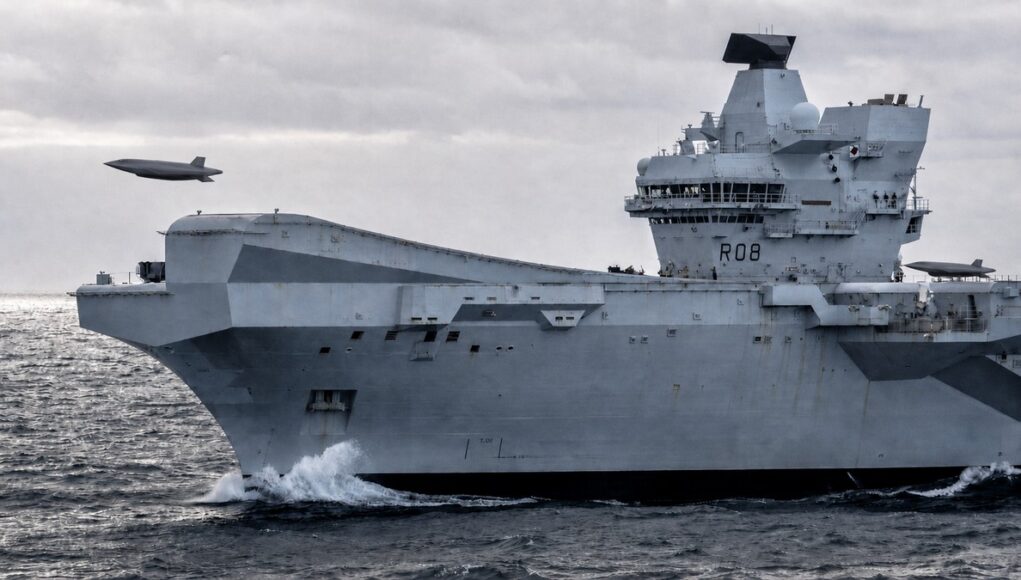
The Royal Navy’s ambition to operate jet-powered autonomous platforms from its Queen Elizabeth-class carriers has shifted from concept to a concrete timeline. In a written response to Parliament, the Ministry of Defence confirmed its intention to conduct an embarked demonstration of an uncrewed Collaborative Combat Aircraft (CCA) within the next 18 months.
Project VANQUISH and the STOL Challenge
Project VANQUISH focuses on the development of short take-off and landing (STOL), jet-powered autonomous platforms. Moving beyond simple industry engagement, the project is now entering a phase focused on technical feasibility and acquisition options. The goal is to integrate these systems seamlessly with existing carrier operations, providing a force multiplier for the F-35B fleet.
A Concrete Timeline Amidst Political Shifts
The commitment, restated by Minister for Defence Readiness and Industry Luke Pollard, follows original goals set in late 2025. Despite recent high-level resignations over the Defence Investment Plan, the 18-month window remains the official target. This timeline suggests a sense of urgency in fielding low-cost, high-capability uncrewed systems as part of the UK’s broader maritime strategy.
Operational Impact
The successful integration of CCAs would allow the Royal Navy to extend the reach and persistence of its carrier strike groups without the cost or complexity of additional crewed aircraft. These drones are expected to perform roles ranging from electronic warfare to sensor relay, acting as “loyal wingmen” to crewed fighters or operating independently in high-threat environments.
The transition from feasibility studies to active carrier deck trials marks a critical pivot in how the Royal Navy intends to maintain airspace dominance in the coming decade.