
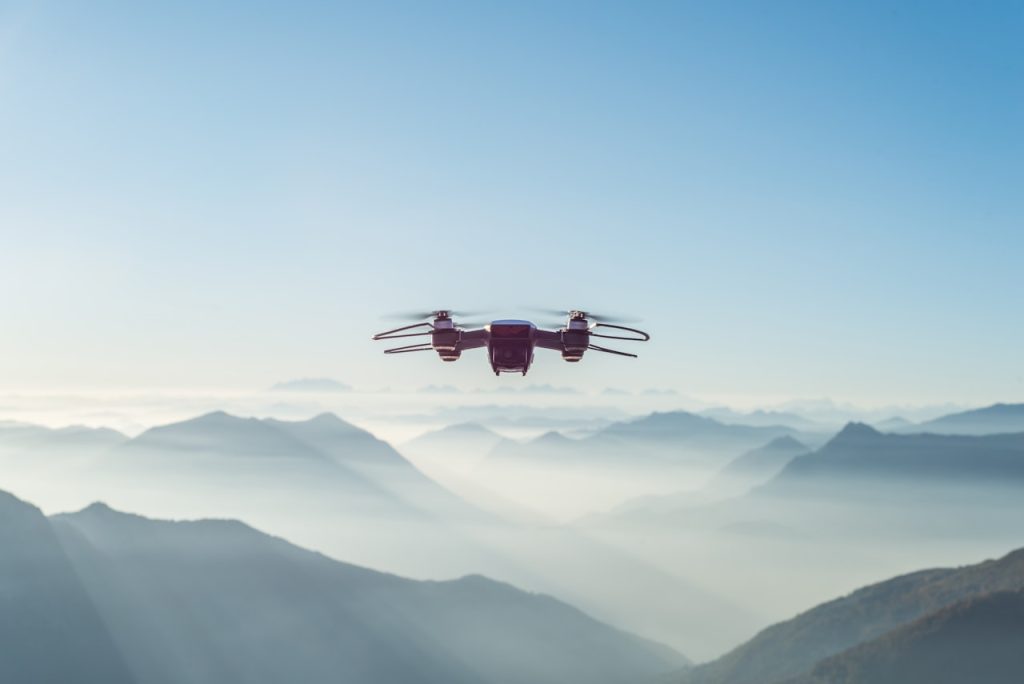
On December 22, 2025, the Federal Communications Commission added all foreign-manufactured drones to its “Covered List,” a designation previously reserved for telecom hardware deemed a national security risk. The move hit the drone industry like a freight train. Here’s what it actually means, what it doesn’t mean, and where this is likely to go.
What the FCC’s Covered List Is
The Covered List, established under the Secure and Trusted Communications Networks Act, identifies communications equipment and services that pose an unacceptable risk to national security. Equipment on the list can’t receive new FCC authorizations to operate in the United States.
Previous entries were telecom hardware: Huawei, ZTE, and a handful of others. The December 2025 addition of foreign-manufactured drones is something different. It’s the first time a non-telecom hardware category has been swept in. That’s not a minor procedural step. It signals a deliberate expansion of how the US government frames drone technology as a security concern.
What This Does and Doesn’t Affect
The Covered List designation applies to new FCC authorizations. It does not retroactively cancel authorizations already granted. That’s the part most pilots need to hear clearly.
What this means in practice:
- Grandfathered drones stay legal. Any drone that received FCC authorization before December 22, 2025, including the DJI Avata 360, Mavic 3 series, Mini 3, Air 3, and essentially everything in the current DJI lineup, can still be sold, purchased, and flown in the United States. Nothing changes for existing owners.
- New models face a hard wall. Any foreign-manufactured drone that hadn’t cleared FCC authorization before the cutoff cannot get new authorization under the current rules. New DJI product lines, unreleased Autel models, new Parrot hardware: anything not already through the authorization pipeline is blocked from the US market.
- Your drone is fine. If you own a Mavic 3 Pro, a Mini 4K, or any other previously authorized product, you can keep flying without any change to your legal status.
The confusion in news coverage has mostly come from conflating “foreign drones are on the Covered List” with “foreign drones are banned.” They’re not the same thing, at least not yet, and not for existing products.
Who’s Affected Beyond DJI
DJI is the dominant name in this conversation, but the Covered List applies to all foreign manufacturers. Autel Robotics, despite its previously favourable positioning with the US DoD, is a Chinese company and falls under the same rules for new model authorizations. French manufacturer Parrot, which had marketed itself as the US-compliant alternative to DJI, is also affected as a foreign-manufactured product.
The practical impact differs by company. DJI has by far the largest US installed base, which means it faces the most disruption for future launches. Autel and Parrot hold smaller market positions but face the same block on new product entry.
For US consumers, this will start showing up as a narrowing product catalogue. The drones on shelves today will remain available and legal. What won’t appear are next-generation models from foreign manufacturers: the DJI Mavic 5, whatever Autel had planned for 2026, and so on. That product pipeline is now frozen for the US market.
The National Security Argument
The US government’s concern centres on Chinese-manufactured drones, DJI’s specifically, and the risk that they could collect and transmit sensitive data to the Chinese government under China’s national security laws, which can compel domestic companies to cooperate with intelligence services regardless of where their products are sold.
This argument isn’t new. It’s driven DoD restrictions on DJI equipment in military and government contexts since 2017. The December 2025 FCC action extends that concern to the civilian market, a much broader population of users and use cases.
DJI’s position is consistent and documented: there is no verified evidence of DJI drones transmitting user data to the Chinese government. The company has commissioned independent security audits, built local data processing modes into its products, and offered source code access to regulatory authorities. DJI argues the Covered List designation rests on a policy judgment, a National Security Determination, rather than on specific technical evidence of data exfiltration.
Both positions are defensible. The absence of confirmed espionage is not evidence it hasn’t happened. The theoretical risk of what a Chinese company could be compelled to do under Chinese law is a real consideration, but it’s distinct from what any specific product demonstrably does today. Policymakers are making a probability judgment, not citing proven incidents. That’s worth knowing when you’re evaluating the coverage.
Industry Reaction: Loud and Broadly Unified
Commercial operators across agriculture, public safety, construction, and infrastructure inspection have pushed back hard. The Association for Unmanned Vehicle Systems International (AUVSI) and other industry bodies have argued the ban causes real operational damage without a credible domestic alternative in position to fill the gap, and that’s a fair assessment.
Agriculture is the sharpest example. DJI’s agricultural spraying platforms are used across Australian and US farms for precision application. There is no US-manufactured equivalent at comparable price and capability levels. Operators who built their precision ag workflows around DJI hardware don’t have a drop-in substitute to switch to.
Public safety agencies face a similar problem. Fire services, law enforcement, and search-and-rescue teams that have built standard operating procedures around DJI thermal platforms are looking at significant operational disruption if they’re required to migrate to domestic alternatives that don’t yet exist at scale.
The criticism from industry isn’t that national security doesn’t matter. It’s that a blanket exclusion of all foreign-manufactured hardware, without a domestic ecosystem ready to absorb the demand, creates a gap that damages US operations without a clear security gain.
What Comes Next
Legal challenges are expected. DJI has the resources, the legal standing, and the commercial incentive to pursue judicial review. Whether courts will overturn a national security determination, historically a difficult standard, is unclear, but the case for litigation is strong and DJI would be leaving money on the table not to pursue it.
Congressional action is also possible. Several legislators have raised concerns about the impact on agriculture and public safety, and there may be appetite for a more targeted regulatory approach, one that addresses specific security risks rather than excluding every foreign-manufactured drone regardless of its use case or threat profile.
For domestic manufacturers, this is the clearest commercial signal they’ve received in years. Skydio, which manufactures in the United States, has already seen increased enterprise and government interest. The gap between current US manufacturing capacity and the market need it would have to fill is large. But the policy environment is now pushing serious capital toward closing that gap, and the timeline will be shorter than it would have been without regulatory pressure.
What Pilots Should Do Right Now
If you fly existing DJI or other foreign-manufactured drones: nothing changes. Keep flying legally under existing authorizations.
If you were planning to buy a new drone: buy now from the current generation of authorized products. Retailers still have inventory. Authorized drones remain fully legal to purchase and fly, and that status isn’t going anywhere.
Track the legal and legislative developments. The December 2025 FCC action is the opening move. Expect 12 to 24 months of court filings, congressional hearings, and possible rule revisions before this settles into anything like a stable outcome. This story has a long way to run.